
RF adapters
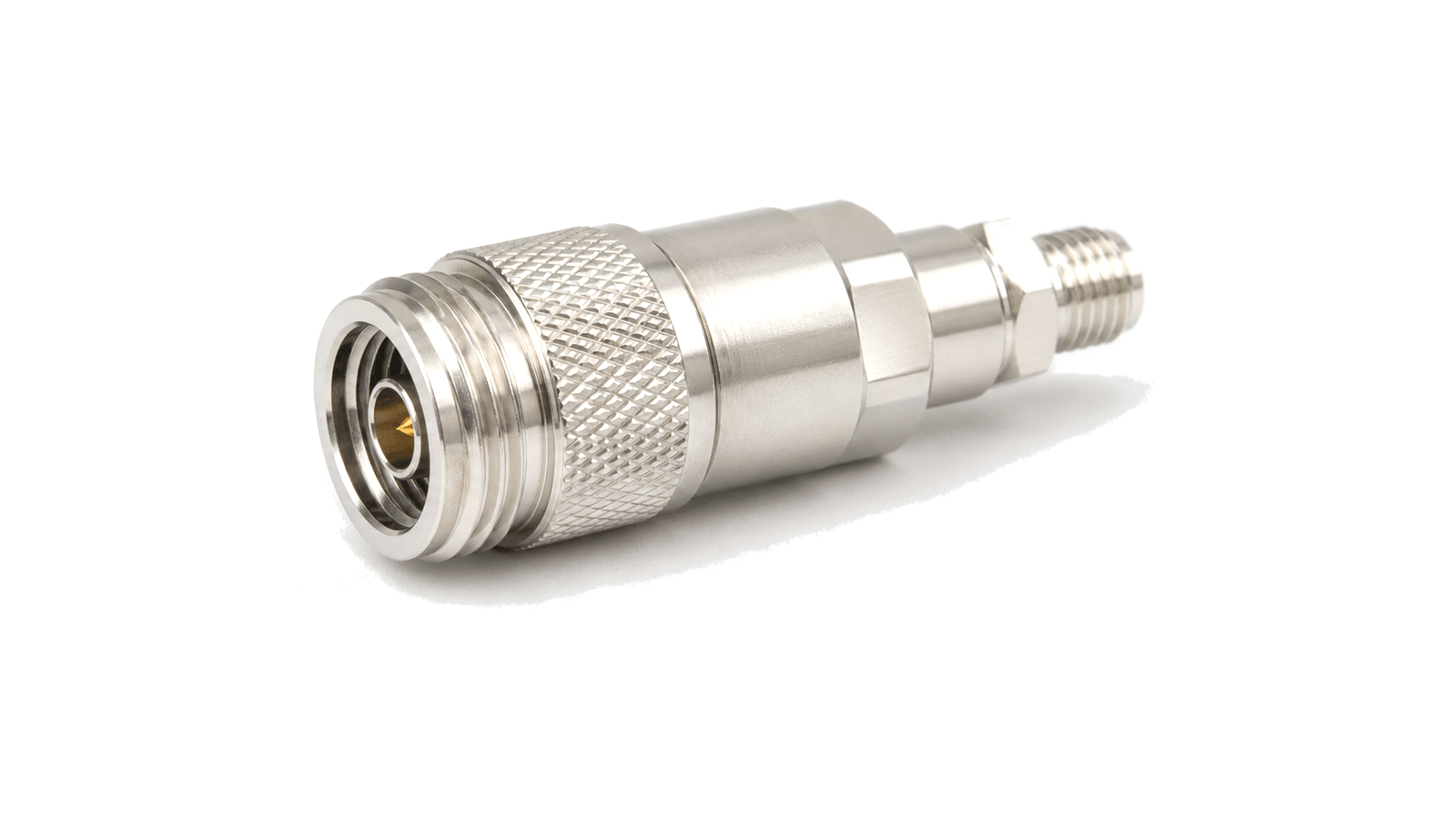
RF adapters provide a compact interface change between coaxial connector formats. They are used when two RF ports need to mate directly and the transition must remain short, mechanically stable and electrically predictable.
Adapter interface data
Important data includes connector series, gender, impedance, frequency range, VSWR, insertion loss, power rating, plating, center contact design, mating life and mechanical length. Every adapter should be treated as part of the RF path because each transition can add reflection, loss and mechanical tolerance.
What does the RF Adapters category cover?
RF adapters provide compact transitions between connector series, genders or interface formats, with connector type, impedance, frequency range, VSWR and mechanical length clearly defined.
How should hardware in the RF Adapters category be selected?
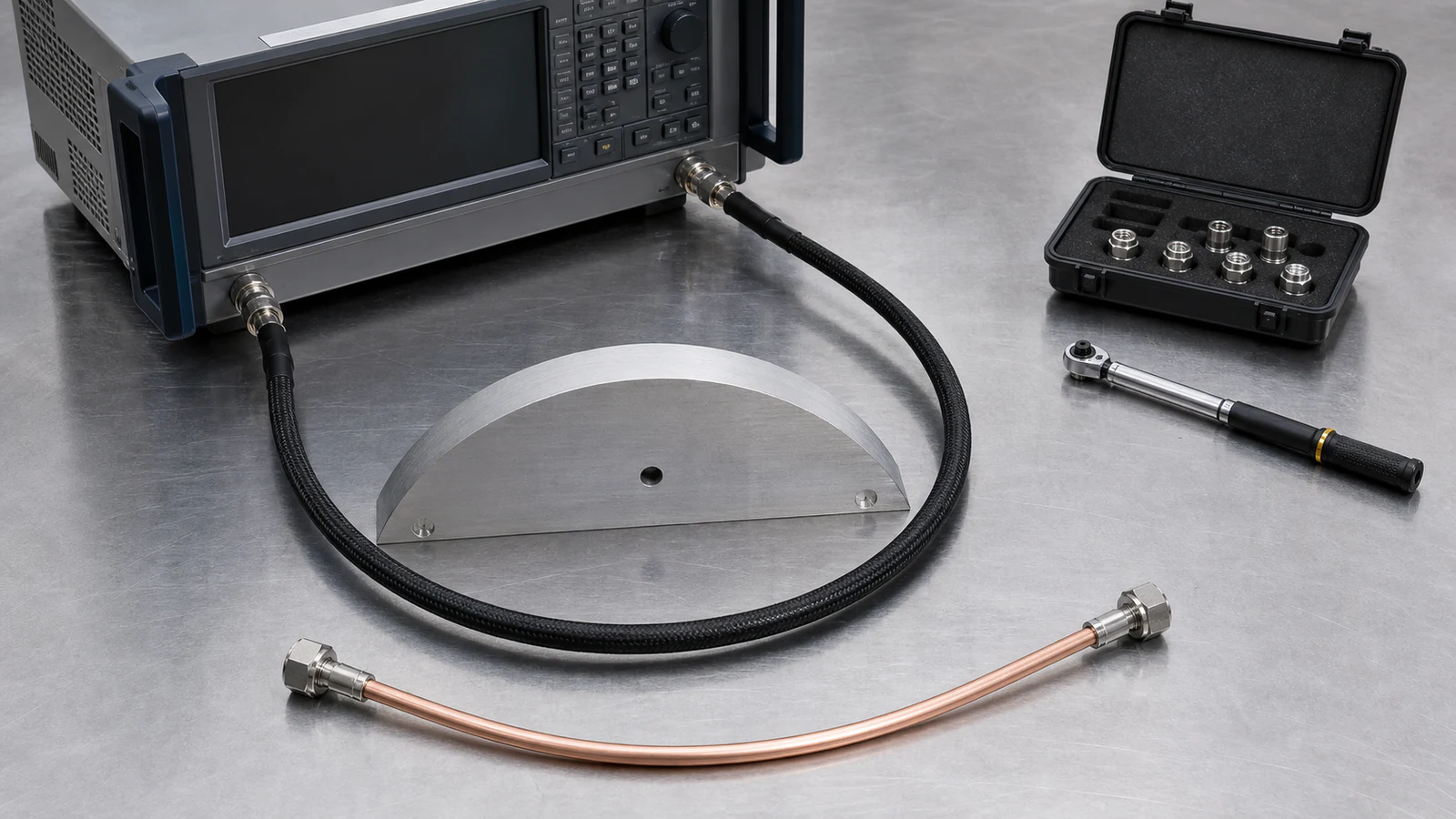
A field-ready method for specifying RF and microwave coaxial cable assemblies by topology, calibrated reference planes, insertion loss, return loss, power, phase and amplitude stability, delay, shielding, bend limits, connector control, environment and acceptance evidence.
- Freeze the finished two-port assembly before comparing cable series
- Start with topology, installation and service state
- Define continuous frequency coverage and both reference planes
Which specifications matter when evaluating RF Adapters?
Important data includes connector series, gender, impedance, frequency range, VSWR, insertion loss, power rating, plating, center contact design, mating life and mechanical length. Every adapter should be treated as part of the RF path because each transition can add reflection, loss and mechanical tolerance.
How should hardware in the RF Adapters category be tested and verified?
Specify an RF coaxial cable assembly as one controlled two-port configuration. Freeze both connector interfaces, gender and orientation, assembly length and tolerance, routing, minimum static and dynamic bend radius, continuous frequency band, reference impedance, insertion-loss and return-loss limits, average and peak power, phase or delay stability, shielding, temperature and environment. Define the calibrated reference planes, connector torque, preconditioning, flexure and thermal sequence, uncertainty, pass/fail limits and retained Touchstone or tabular data.