
LCRF

Privacy preferences

Choose optional purposes independently. You can change or withdraw your choice at any time from the footer.

Strictly necessary

Required for security, session functions and storing your privacy choice.

Always active
Preferences

Remembers optional display or language settings when these features are enabled.

Analytics

Uses first-party visitor and session identifiers to measure pages, referrals and inquiry interactions.

Marketing

Allows marketing measurement or third-party advertising technologies if they are introduced in the future.

Broadband SSPA Power Chain

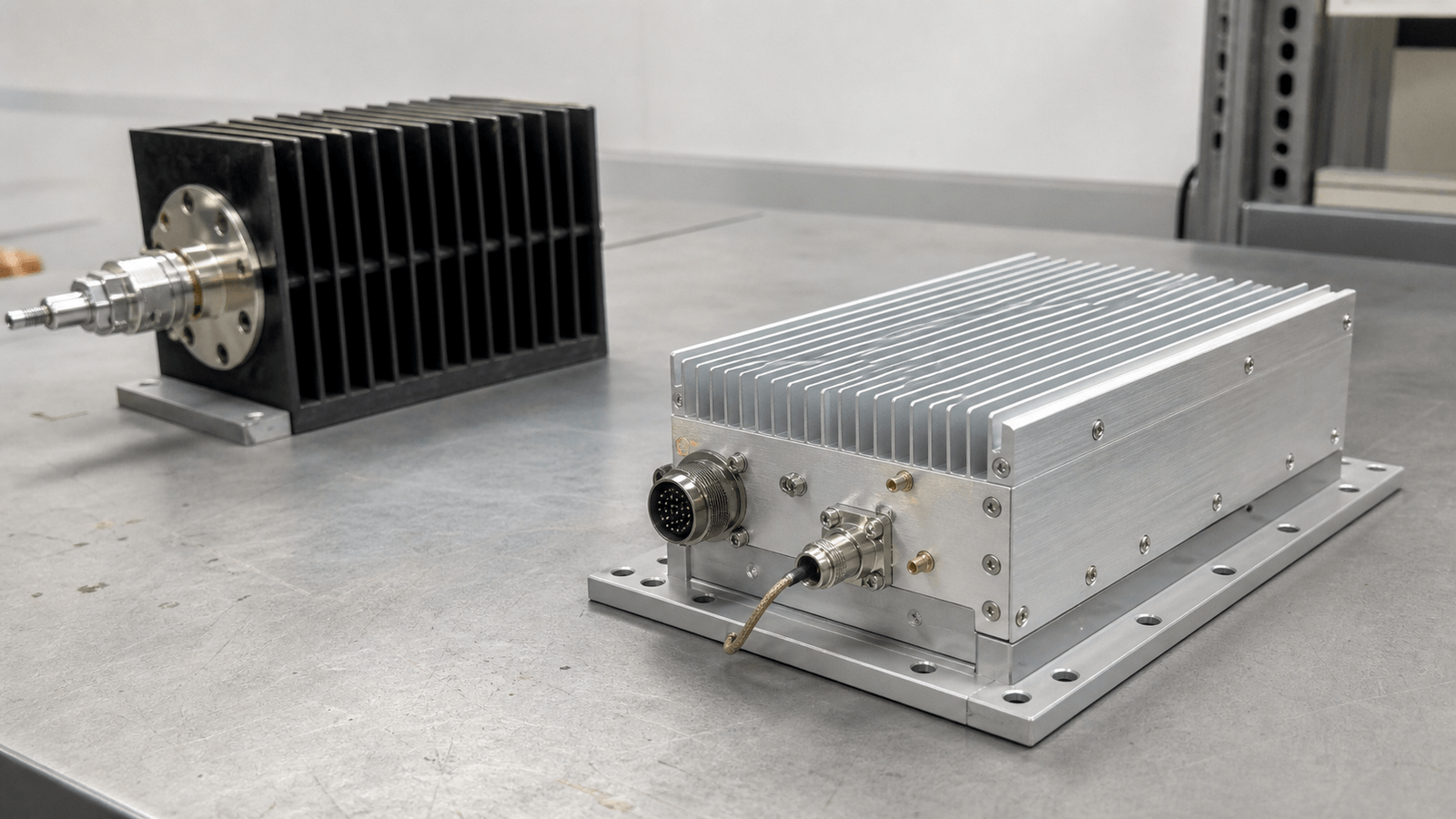
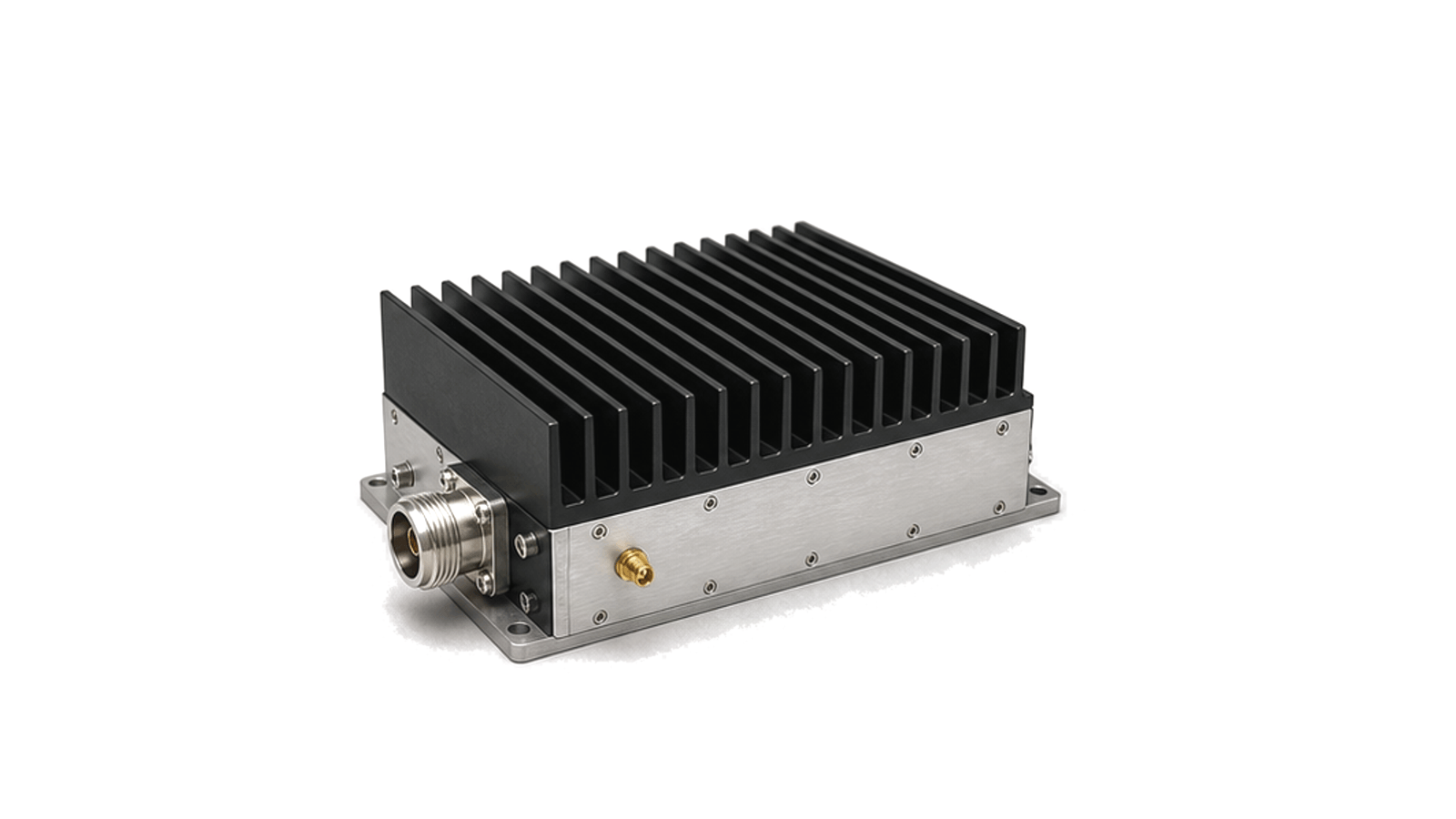
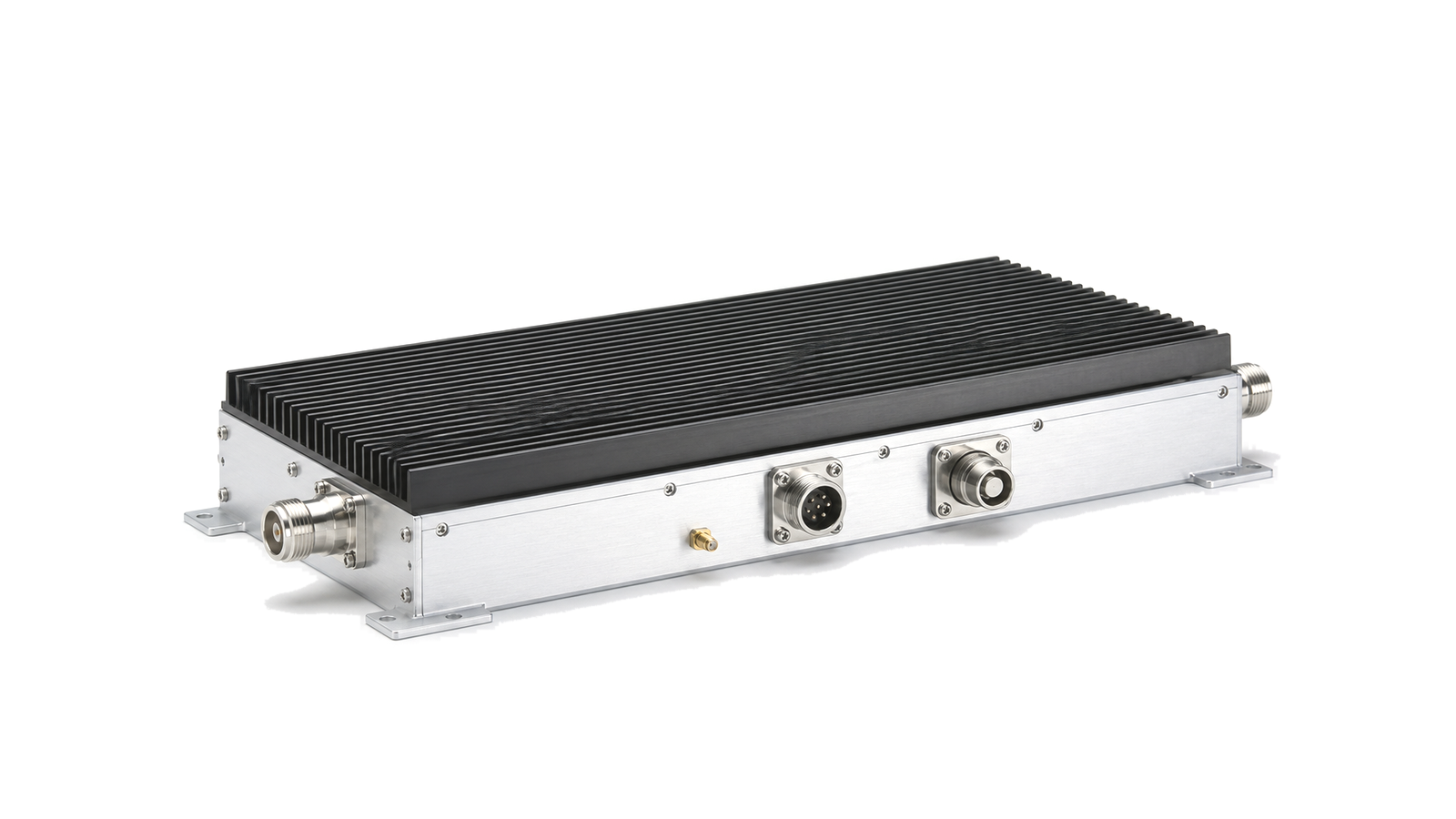
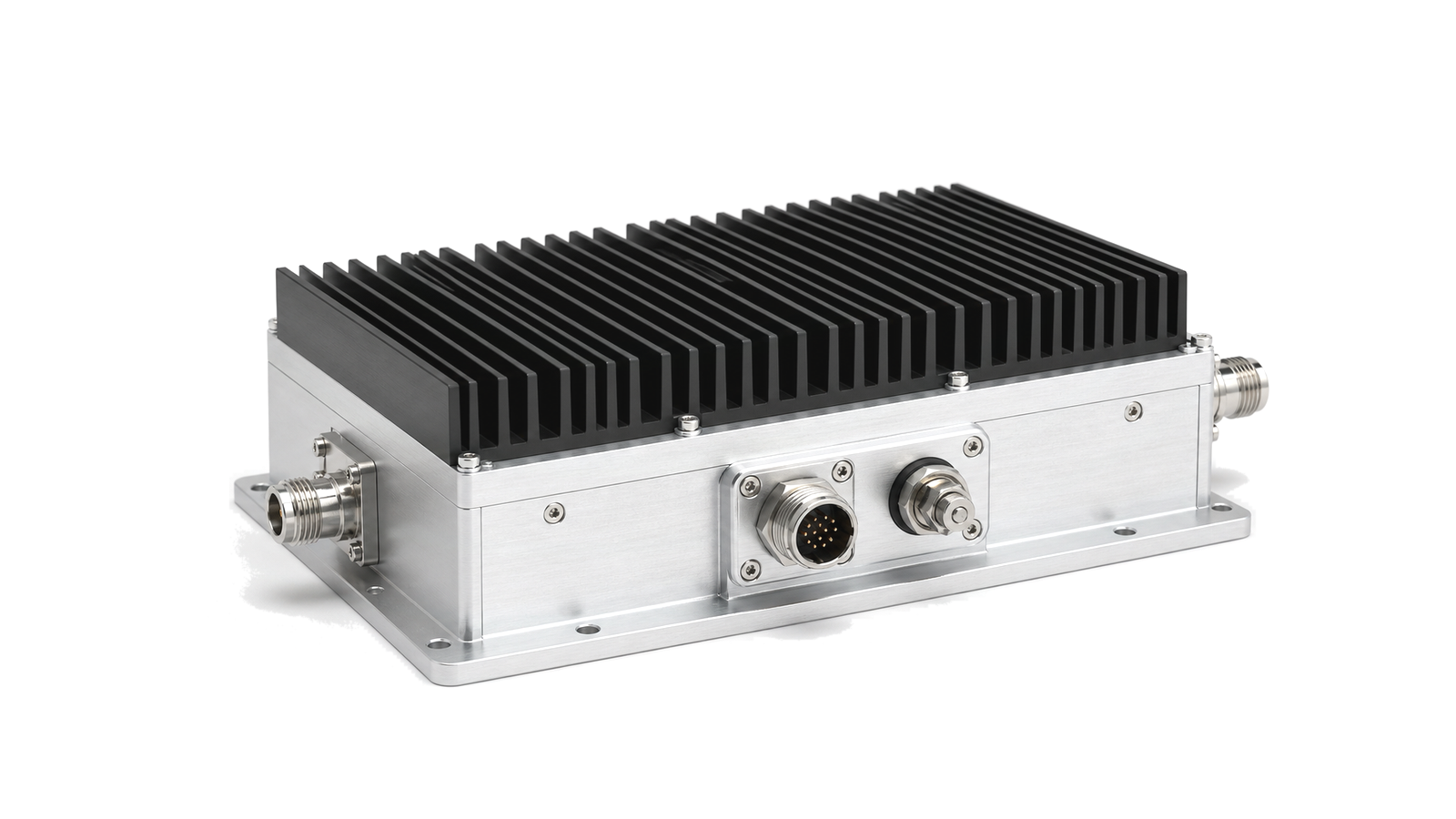
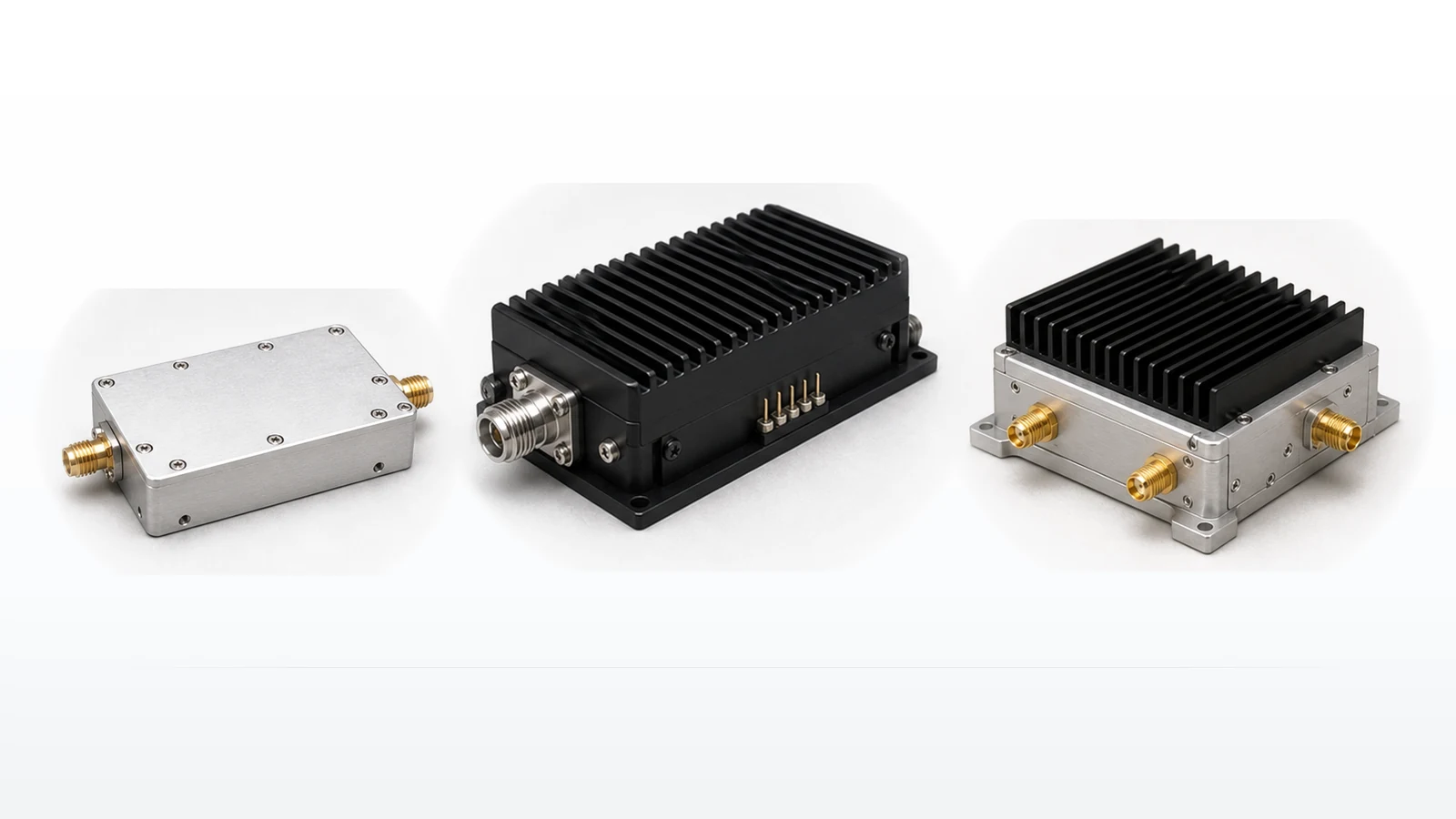
Broadband SSPA power chains use solid-state RF amplifier stages to deliver controlled output power across wide operating bands.

Broadband SSPA Replacement RF solution visual

Broadband SSPA Power Chain

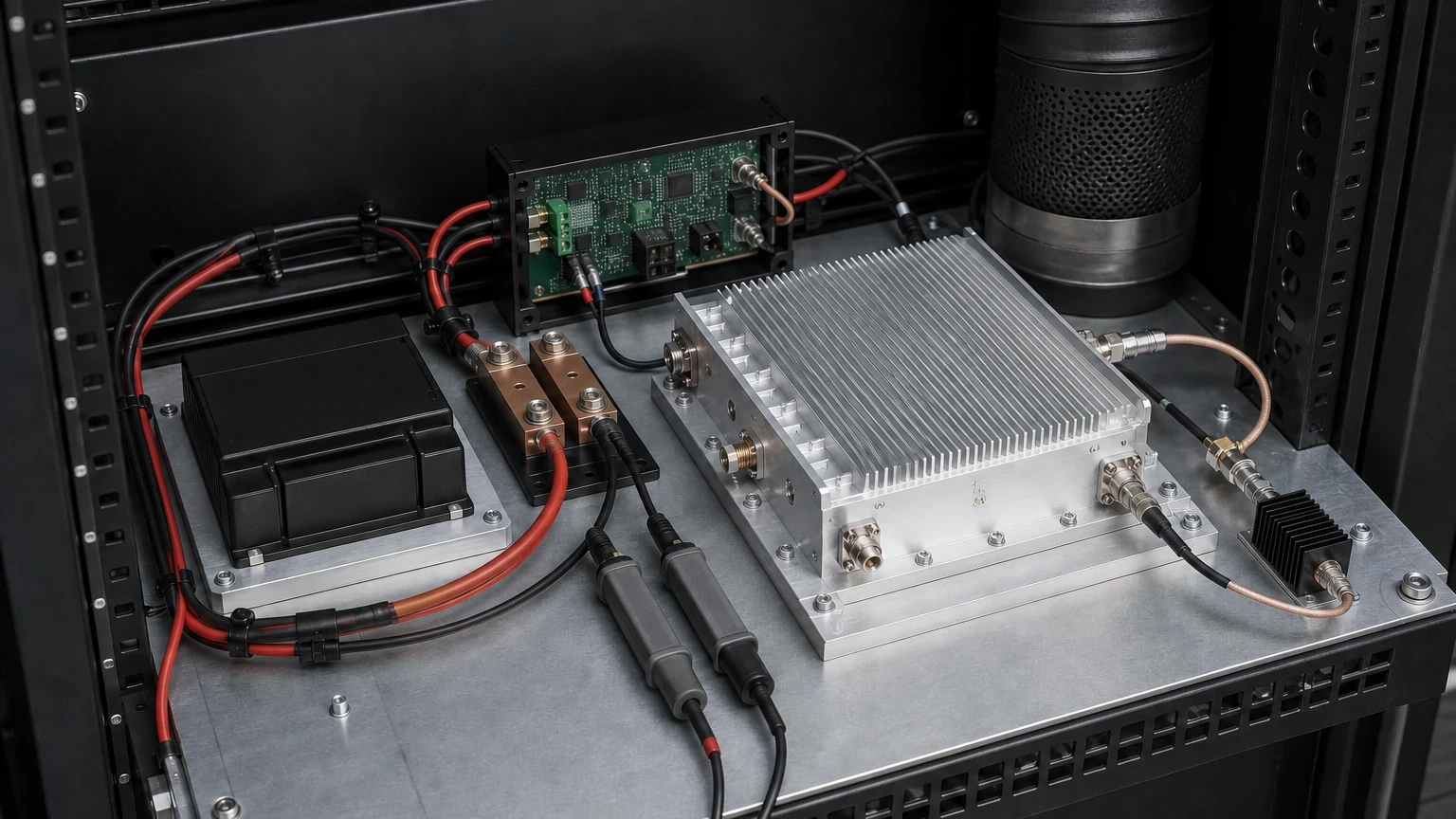
A broadband SSPA power chain uses solid-state RF amplifier hardware to deliver controlled output power across a wide frequency range. The chain normally combines driver gain, broadband power amplifier stages, bias supply, monitoring and thermal management in a serviceable RF output path.

Amplifier path

The path is shaped by bandwidth, saturated power, small-signal gain, gain flatness, efficiency, supply voltage, duty cycle, VSWR behavior and cooling method. Solid-state architecture is useful where repeatable control, modular service and fast protection response matter.

Engineering data

Useful records include frequency range, output power, gain, flatness, harmonics, spurious output, supply current, operating mode, cooling requirement, protection response and connector interface.
Articles

FAQ

How should an RF power amplifier supply be sized for peak current, duty cycle and load transients?

Separate average and RMS heating from pulse-on current, edge-rate demand, inrush and fault current, then verify rail droop and recovery at the module terminals.

How much power-supply ripple and noise can an RF amplifier tolerate?

There is no universal ripple limit; derive a rail spectrum from the allowed RF spur or noise contribution and the amplifier's supply sensitivity under the real operating condition.

What thermal-interface data are needed before selecting air or liquid cooling for an RF power module?

Define dissipated heat, temperature reference, interface stack, airflow or coolant conditions and loss-of-cooling behavior before comparing cooler ratings.

How should RF P1dB and two-tone intermodulation tests differ?

P1dB is a single-tone gain-compression sweep, while two-tone IMD measures nonlinear mixing products with stated tone spacing, per-tone power and system residual checks; the results answer different questions.

Engineering inquiry

Share your RF requirement

Share the product, operating requirements and project context. Our engineering team will route your request to the right specialist.

AttachmentsAttach drawings, BOMs, specifications or test files. Up to 5 files, 10 MB each and 25 MB total.
or drag and dropPDF, DOCX, XLSX, CSV, TXT, JPG, PNG, S1P and S2P
Typically reviewed within one business dayProject information is handled confidentially