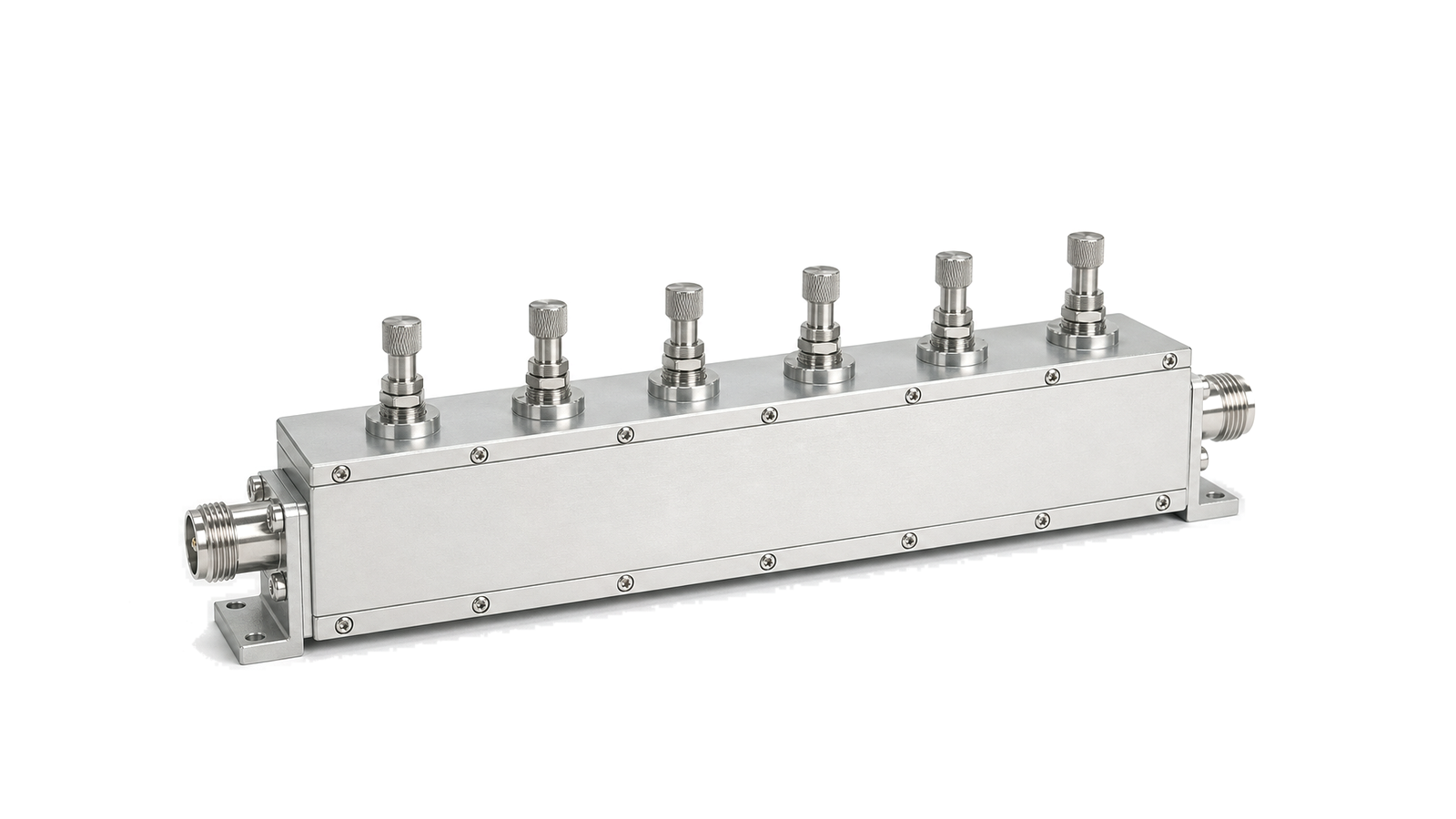
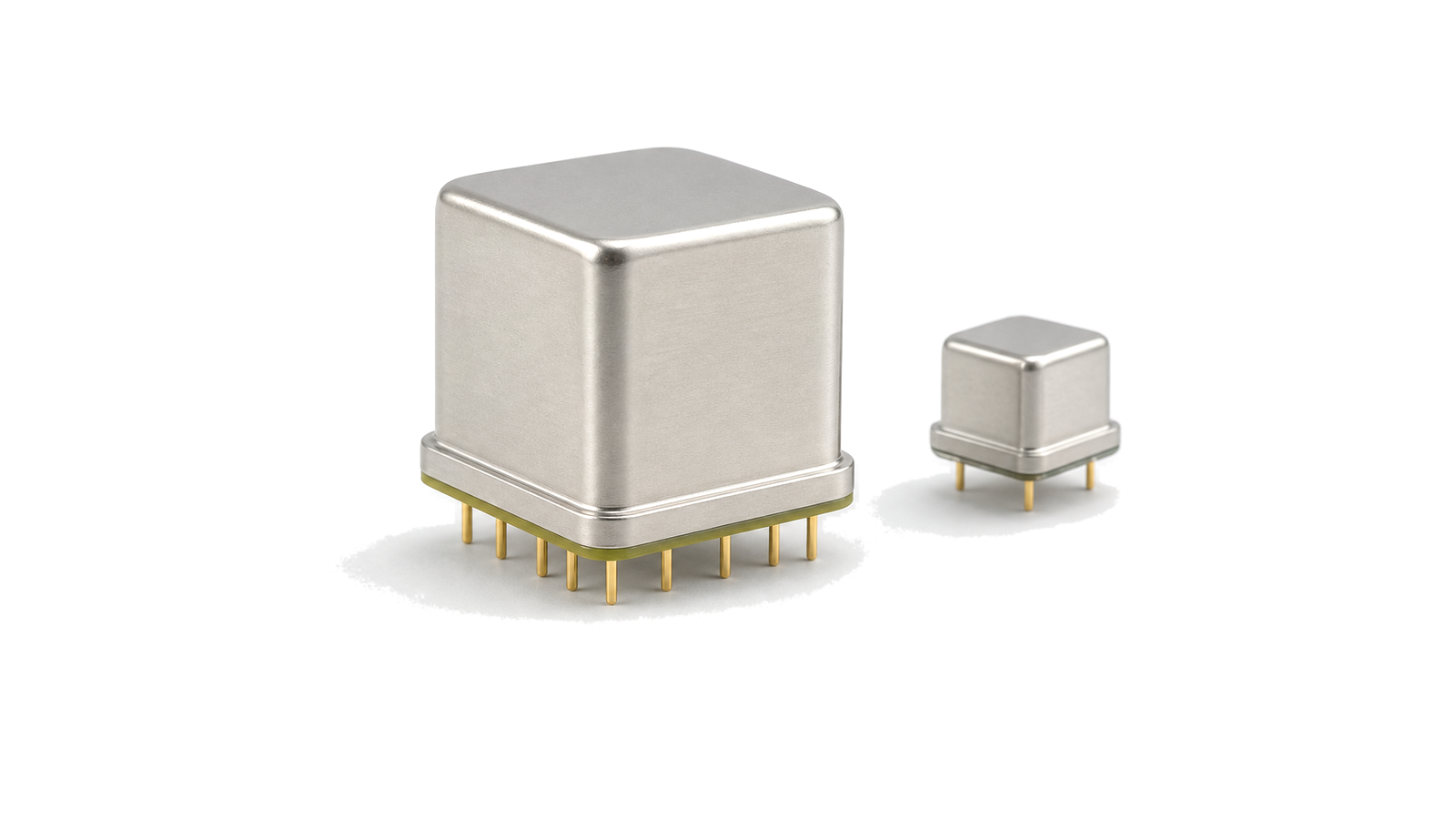
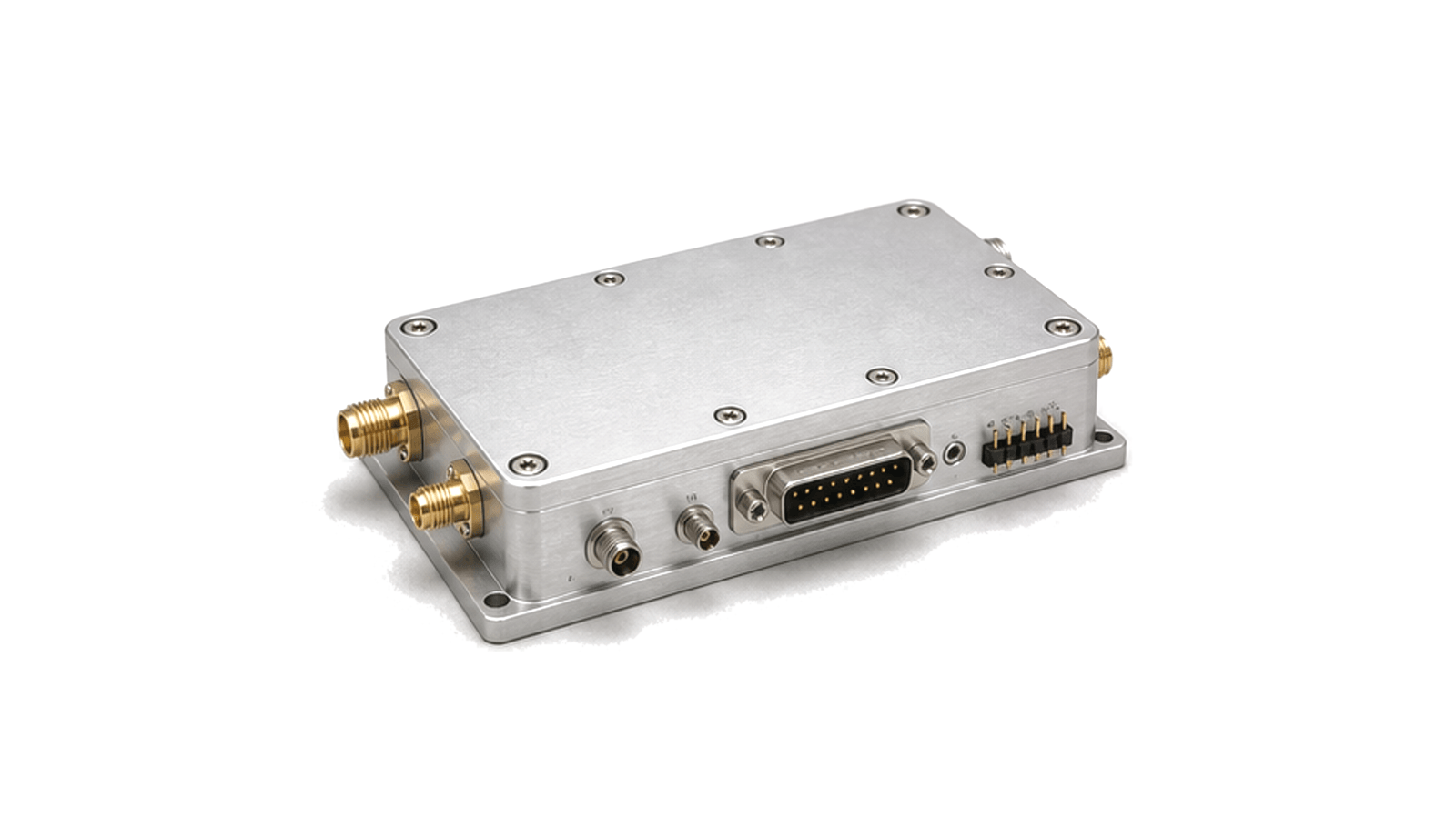
GNSS and BeiDou receiver RF paths
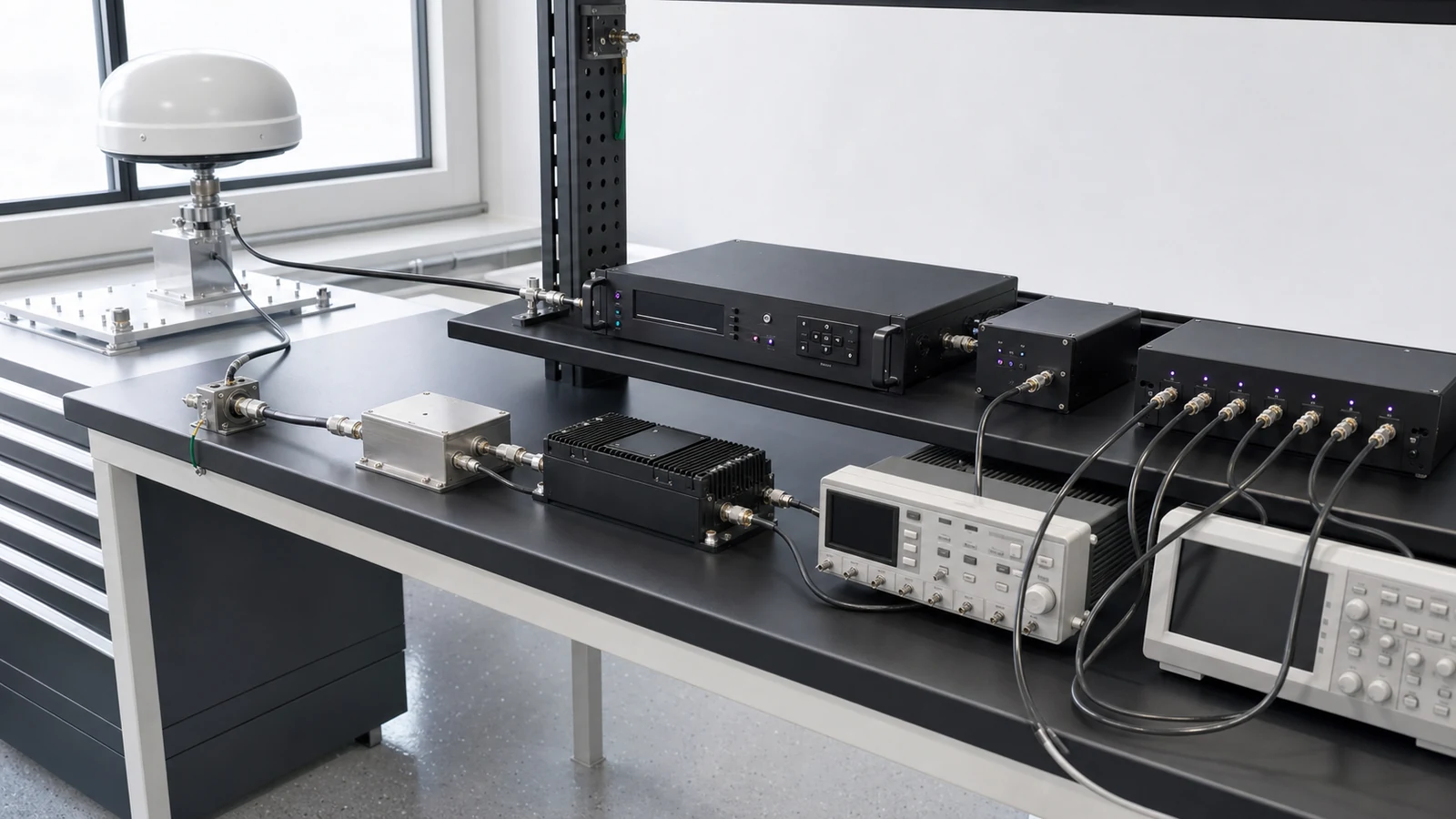
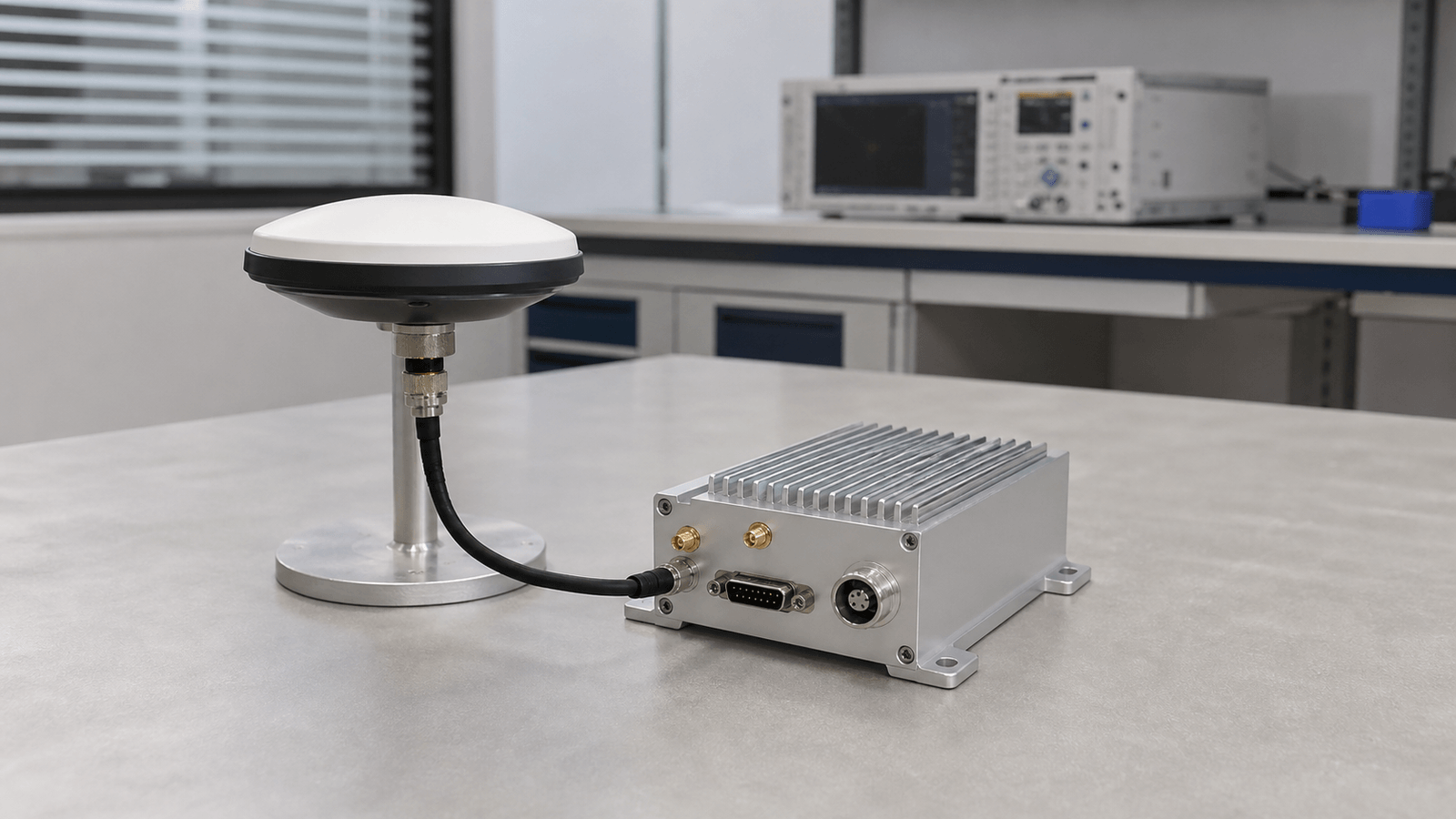
GNSS and BeiDou receive chains start with very low-level satellite signals and carry them through antennas, filters, low-noise gain stages, timing references and distribution hardware. The RF path has to preserve sensitivity while keeping interference, cable loss and timing drift under control.
Engineering focus
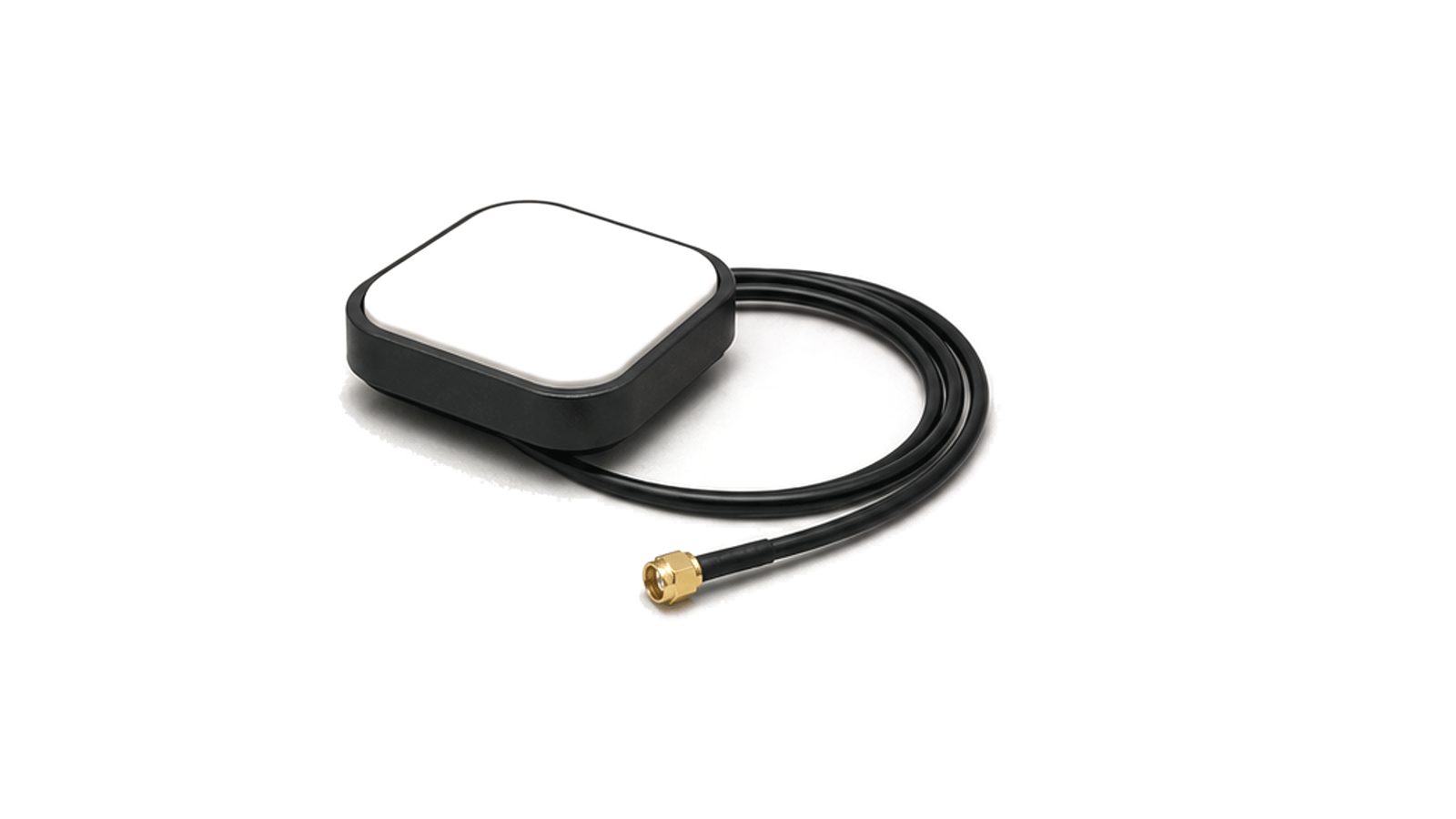
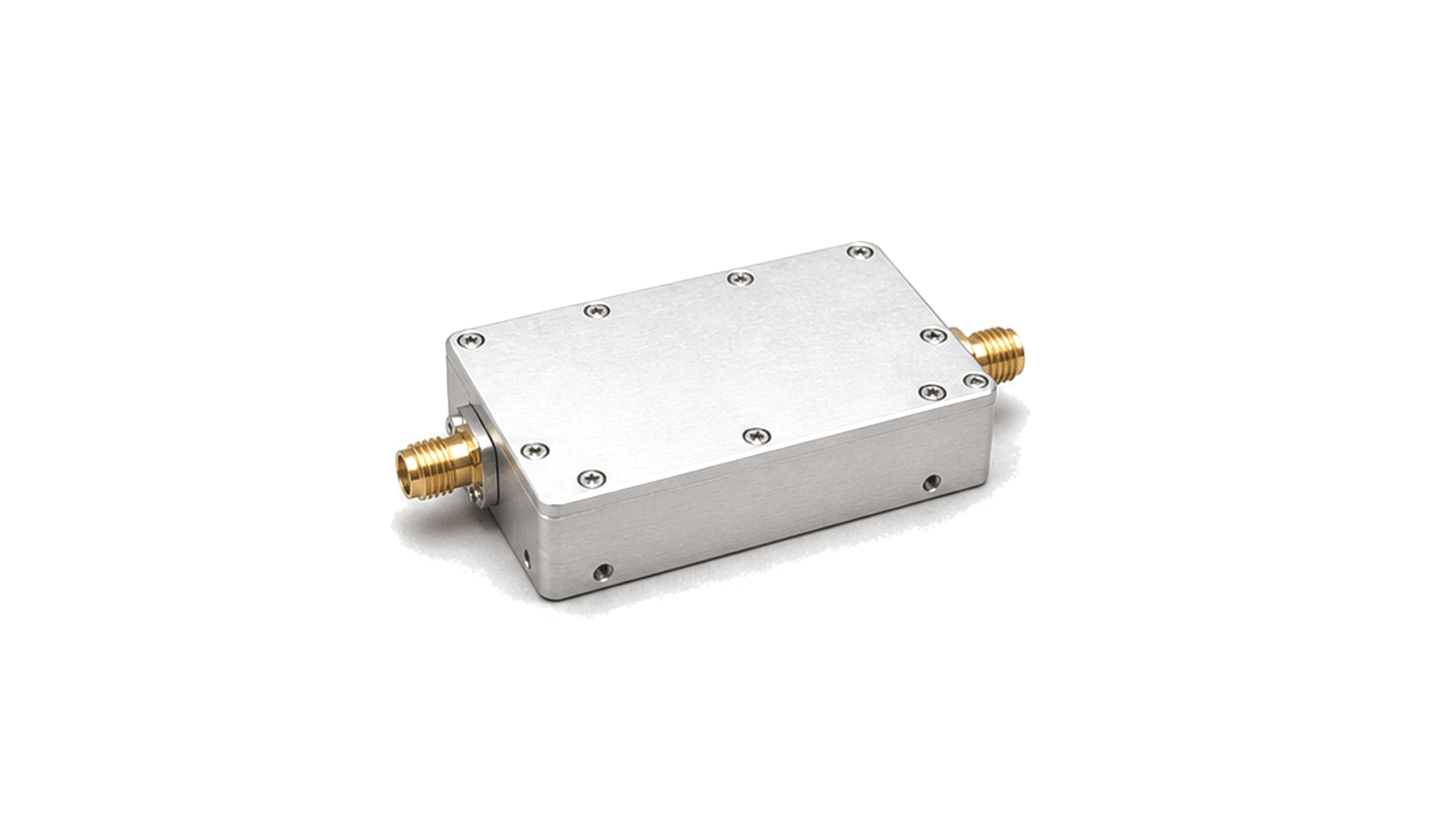
Useful data includes antenna gain and polarization, filter passband, LNA noise figure, gain distribution, cable delay, reference stability, phase noise, jitter and output format. These values determine whether the receiver path can feed positioning, timing or synchronized RF equipment with repeatable behavior.
System context
The application connects GNSS/BeiDou antennas, receiver front ends, stable references and distribution networks used in timing receivers, navigation equipment and multi-channel RF platforms.
Treat reception and timing as one evidence chain
- RF hardware for GNSS / BeiDou Receivers
- Define the service, operating environment and loss-of-signal behavior List the constellations, civil signals, frequency bands and simultaneous combinations the equipment must use. State whether the system supports basic navigation, multi-frequency positioning, fixed timing, time transfer or a holdover-dependent network....
- GNSS / BeiDou Receivers RF requirements
- Define the service, operating environment and loss-of-signal behavior List the constellations, civil signals, frequency bands and simultaneous combinations the equipment must use. State whether the system supports basic navigation, multi-frequency positioning, fixed timing, time transfer or a holdover-dependent network....
- GNSS / BeiDou Receivers RF architecture
- Define the service, operating environment and loss-of-signal behavior List the constellations, civil signals, frequency bands and simultaneous combinations the equipment must use. State whether the system supports basic navigation, multi-frequency positioning, fixed timing, time transfer or a holdover-dependent network....
- GNSS / BeiDou Receivers RF hardware selection
- Define the service, operating environment and loss-of-signal behavior List the constellations, civil signals, frequency bands and simultaneous combinations the equipment must use. State whether the system supports basic navigation, multi-frequency positioning, fixed timing, time transfer or a holdover-dependent network....
- GNSS / BeiDou Receivers RF testing and verification
- Verify the chain from antenna interface to the timing consumer
How to Specify a GNSS Receiver Front End and Precision Timing Chain
A practical method for defining GNSS and BeiDou antenna paths, filtering, low-noise gain, receiver interference tolerance, disciplined references, holdover and PPS or 10 MHz distribution with measurable acceptance evidence.