
LCRF

Privacy preferences

Choose optional purposes independently. You can change or withdraw your choice at any time from the footer.

Strictly necessary

Required for security, session functions and storing your privacy choice.

Always active
Preferences

Remembers optional display or language settings when these features are enabled.

Analytics

Uses first-party visitor and session identifiers to measure pages, referrals and inquiry interactions.

Marketing

Allows marketing measurement or third-party advertising technologies if they are introduced in the future.

RF Instruments, Signal Sources and Calibration

RF instruments, signal sources and calibration hardware establish controlled stimulus, frequency and power references, and traceable RF test conditions.

RF Instruments, Sources & Calibration

Categories

Articles

FAQ

How should RF P1dB and two-tone intermodulation tests differ?

P1dB is a single-tone gain-compression sweep, while two-tone IMD measures nonlinear mixing products with stated tone spacing, per-tone power and system residual checks; the results answer different questions.

What is an RF measurement reference plane, and when is fixture de-embedding required?

The measurement reference plane is the electrical boundary where a corrected value is claimed; de-embedding is needed only when a characterized fixture network must be removed to report at a different DUT plane.

Should a switch matrix, probe and fixture be inside or outside the calibrated RF reference plane?

Place hardware inside the corrected plane only when its full routed state can be calibrated or characterized; otherwise report its contribution explicitly and control it as part of the measured path.

Which calibration-kit data and traceability records should accompany RF measurement hardware?

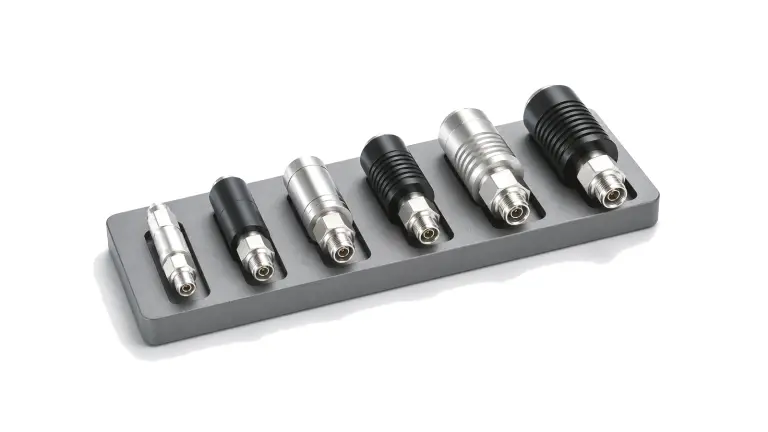
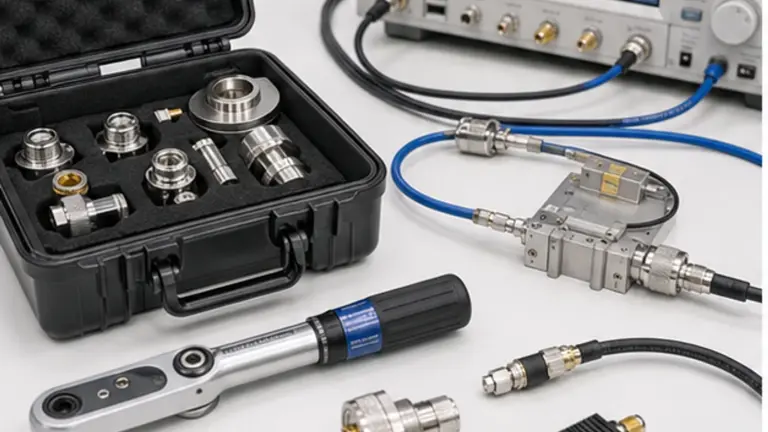
Keep the physical standards tied to the correct kit definition, serial identity, coefficient files, certificate, environmental condition and uncertainty chain used for the reported result.

Does sharing a frequency reference make multiple RF sources phase coherent?

A shared reference aligns average frequency, but deterministic relative phase also depends on trigger timing, divider state, path delay, retune behavior, relock and restart conditions.

How often should an RF test path be verified with a check standard or recalibrated?

Use both time-based intervals and event triggers, with an independent check standard that can reveal drift, cable or connector damage, switch-state change and fixture instability between full calibrations.

How should frequency accuracy, temperature stability, aging and holdover be specified?

Specify accuracy, temperature, aging and holdover as separate error terms with their own interval, environment, warm-up and reference history instead of one unexplained ppm value.

What does PLL settling time mean, and why is lock detect not enough?

PLL settling time is the time from a defined disturbance until the RF output enters and remains inside specified frequency, phase, amplitude and spectral limits; lock detect is only an internal status signal.

When should an RF source use phase-noise spot limits versus integrated jitter?

Use phase-noise spot or mask limits when offset regions drive RF behavior; use integrated jitter only when the project defines the integration band and a time-domain error budget.

Engineering inquiry

Share your RF requirement

Share the product, operating requirements and project context. Our engineering team will route your request to the right specialist.

AttachmentsAttach drawings, BOMs, specifications or test files. Up to 5 files, 10 MB each and 25 MB total.
or drag and dropPDF, DOCX, XLSX, CSV, TXT, JPG, PNG, S1P and S2P
Typically reviewed within one business dayProject information is handled confidentially

How should RF instruments and signal sources be selected?

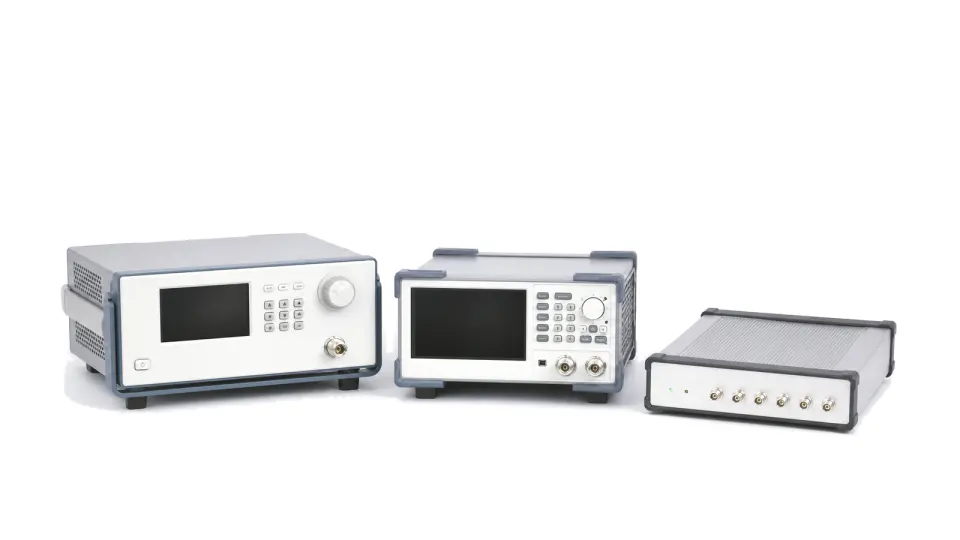
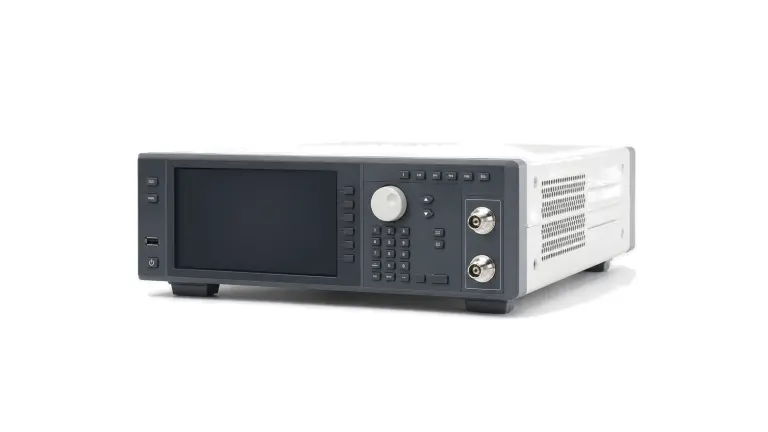
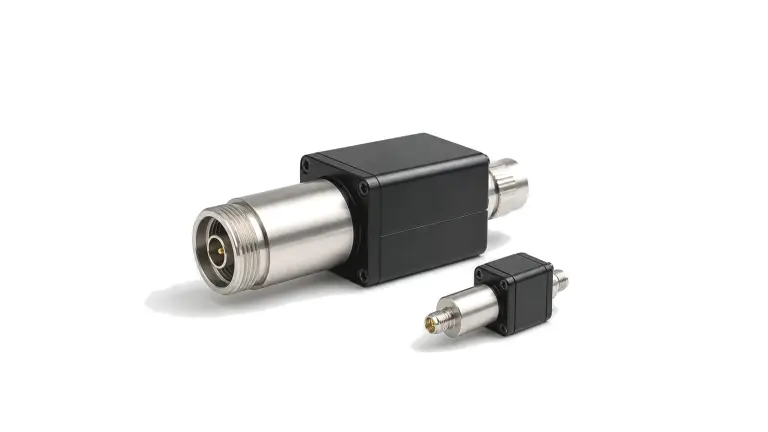
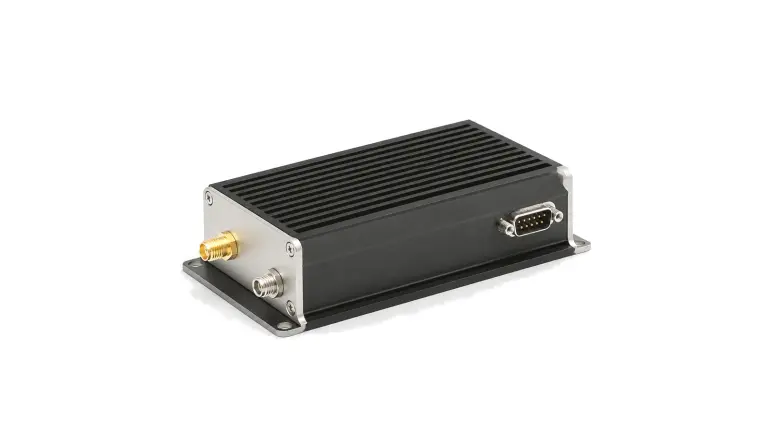
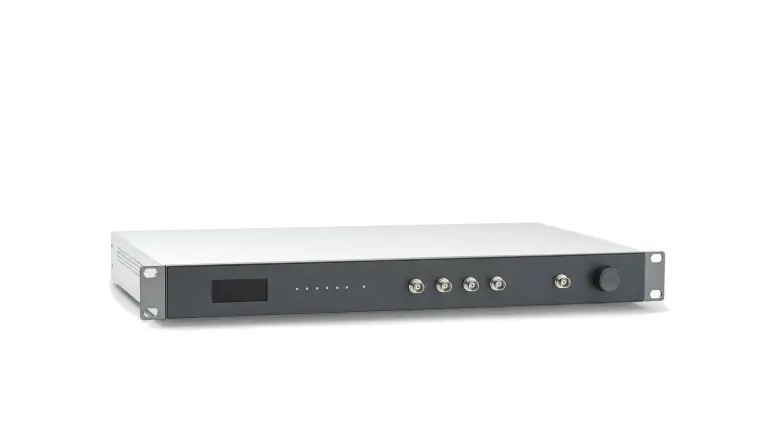
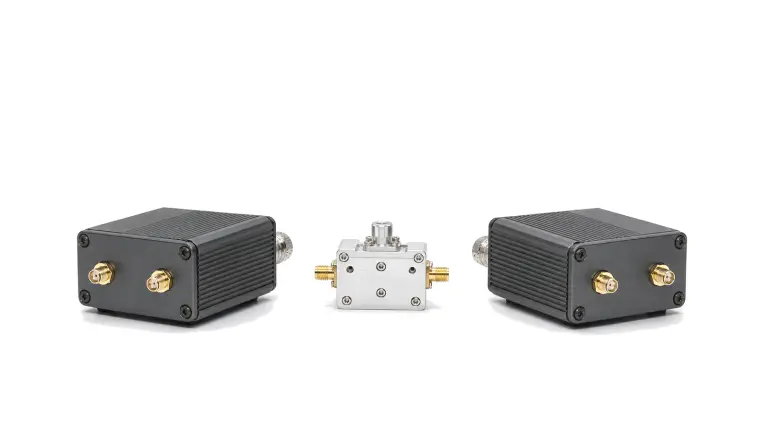
Select the instrument from the measurement task and uncertainty required at the device-under-test reference plane, not from maximum frequency or output power alone. This family covers signal generators, noise and reference sources, synthesized sources, phase-noise test accessories, reference distribution, calibrated attenuation and source-related calibration hardware. Loads, probes, fixtures and general RF test accessories remain in the test-and-measurement hardware family.

Translate the test into source requirements

State the carrier and offset-frequency range, usable level at the DUT, modulation or pulse bandwidth, switching speed, harmonics, non-harmonic spurs, broadband noise and phase-noise limits. Receiver blocking, mixer conversion, oscillator substitution and multi-channel phase tests impose different source-purity and synchronization requirements.

Build accuracy at the DUT reference plane

Amplitude accuracy at the instrument connector is not the delivered uncertainty after cables, adapters, attenuators, switches and mismatch. Define the calibration plane, correction data, connector condition, warm-up, reference lock and recalibration interval. A power meter or other traceable standard may be needed to establish the actual level at the DUT.

Verify repeatability, automation and traceability

Check trigger and clock interfaces, coherent multi-unit operation, list or sweep behavior, settling, remote command coverage, data logging and recovery after interruption. Acceptance records should identify instrument configuration, options, firmware, standards used, calibration status and the uncertainty budget for the intended setup.

  • measurement task, frequency and offset range
  • DUT-plane level range, accuracy and mismatch allowance
  • phase noise, spurs, harmonics and broadband noise
  • modulation, pulse, sweep, switching and settling behavior
  • reference, trigger, phase coherence and automation interfaces
  • calibration plane, standards, uncertainty, interval and records

Acceptance boundary

Approve the configured source and complete signal path against the actual test method. A current calibration certificate does not prove that cables, switching, mismatch, phase noise or setup corrections meet the uncertainty required at the DUT.