
LCRF

Privacy preferences

Choose optional purposes independently. You can change or withdraw your choice at any time from the footer.

Strictly necessary

Required for security, session functions and storing your privacy choice.

Always active
Preferences

Remembers optional display or language settings when these features are enabled.

Analytics

Uses first-party visitor and session identifiers to measure pages, referrals and inquiry interactions.

Marketing

Allows marketing measurement or third-party advertising technologies if they are introduced in the future.

Power Meters & Power Sensors

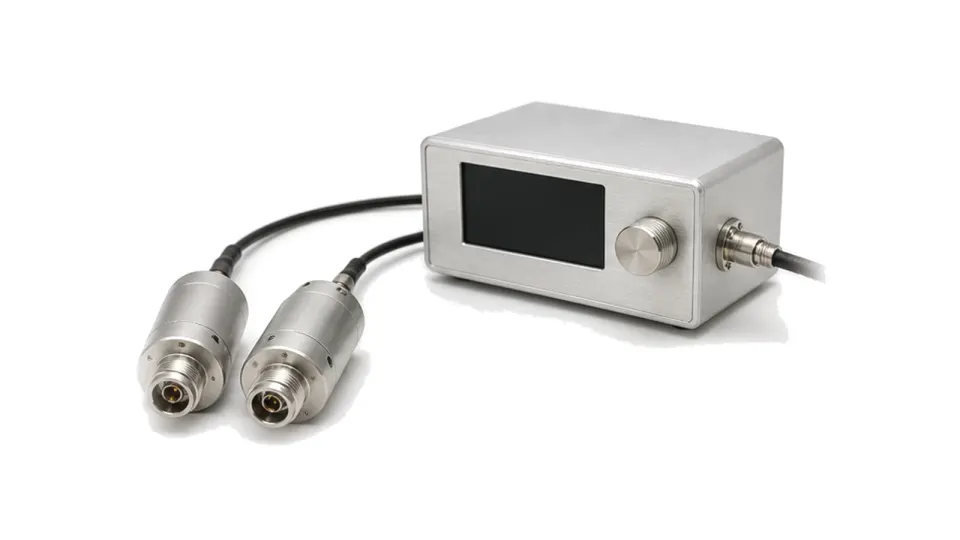
RF power meters and sensors measure RF or microwave power under defined signal conditions for lab validation, production checks, calibration work and field maintenance.

RF power meter and power sensor for microwave measurement

Articles

FAQ

Which calibration-kit data and traceability records should accompany RF measurement hardware?

Keep the physical standards tied to the correct kit definition, serial identity, coefficient files, certificate, environmental condition and uncertainty chain used for the reported result.

How often should an RF test path be verified with a check standard or recalibrated?

Use both time-based intervals and event triggers, with an independent check standard that can reveal drift, cable or connector damage, switch-state change and fixture instability between full calibrations.

What is an RF measurement reference plane, and when is fixture de-embedding required?

The measurement reference plane is the electrical boundary where a corrected value is claimed; de-embedding is needed only when a characterized fixture network must be removed to report at a different DUT plane.

Engineering inquiry

Share your RF requirement

Share the product, operating requirements and project context. Our engineering team will route your request to the right specialist.

AttachmentsAttach drawings, BOMs, specifications or test files. Up to 5 files, 10 MB each and 25 MB total.
or drag and dropPDF, DOCX, XLSX, CSV, TXT, JPG, PNG, S1P and S2P
Typically reviewed within one business dayProject information is handled confidentially

Power Meters & Power Sensors

RF power meters and sensors measure RF or microwave power under defined signal conditions for lab validation, production checks, calibration work and field maintenance.

Measurement role

The sensor converts RF power at the measurement point into a calibrated reading, while the meter or host instrument displays the result and measurement status.

Key data

Important data includes frequency range, average or peak power capability, dynamic range, measurement uncertainty, linearity, connector type, sensor response and calibration factor.

What does the Power Meters & Power Sensors category cover?

RF power meters and sensors measure RF or microwave power under defined signal conditions for lab validation, production checks, calibration work and field maintenance.

How should hardware in the Power Meters & Power Sensors category be selected?

A practical method for specifying RF calibration kits, cables, adapters, switch matrices, signal-conditioning paths, probes and fixtures by interface, reference plane, repeatability, traceability, verification and lifecycle controls.

  • Treat the complete physical path as the controlled measurement hardware
  • Define the measurement task and the hardware boundary
  • Freeze the DUT interface and corrected reference plane

Which specifications matter when evaluating Power Meters & Power Sensors?

Important data includes frequency range, average or peak power capability, dynamic range, measurement uncertainty, linearity, connector type, sensor response and calibration factor.

How should hardware in the Power Meters & Power Sensors category be tested and verified?

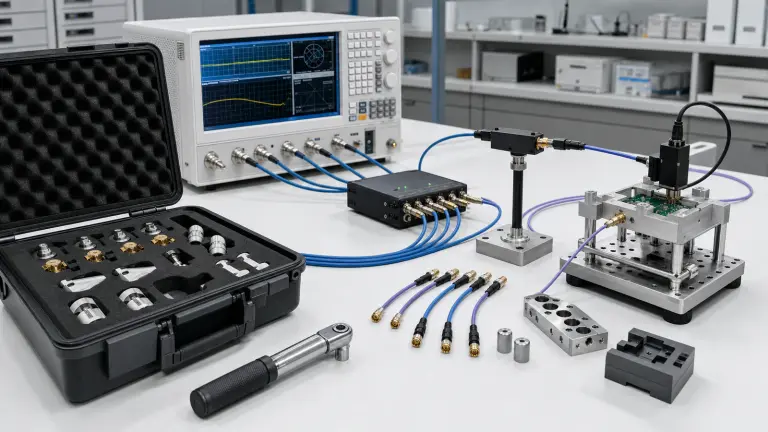
Specify RF test and calibration hardware as one controlled path from the instrument test port to the DUT reference plane. Freeze connector or probe interface, continuous frequency range, level and power limits, calibration method, kit definition, cable and switch paths, fixture geometry, contact practice, connector care, verification artifact, traceability records and replacement triggers. A completed calibration or a calibrated artifact alone does not prove that the assembled path remains accurate after remating, flexing, switching, wear, drift or a fixture revision.

How to Specify RF Test Fixtures and Calibration Hardware: Reference Planes, Repeatability, Traceability and Verification