
LCRF

Privacy preferences

Choose optional purposes independently. You can change or withdraw your choice at any time from the footer.

Strictly necessary

Required for security, session functions and storing your privacy choice.

Always active
Preferences

Remembers optional display or language settings when these features are enabled.

Analytics

Uses first-party visitor and session identifiers to measure pages, referrals and inquiry interactions.

Marketing

Allows marketing measurement or third-party advertising technologies if they are introduced in the future.

Phase-Locked Loops (PLL)

Phase-Locked Loops lock an oscillator to a reference so generated RF channels stay aligned in frequency and phase. They are used in synthesizers, tunable LO paths, transceivers and timing systems that need controlled frequency agility.

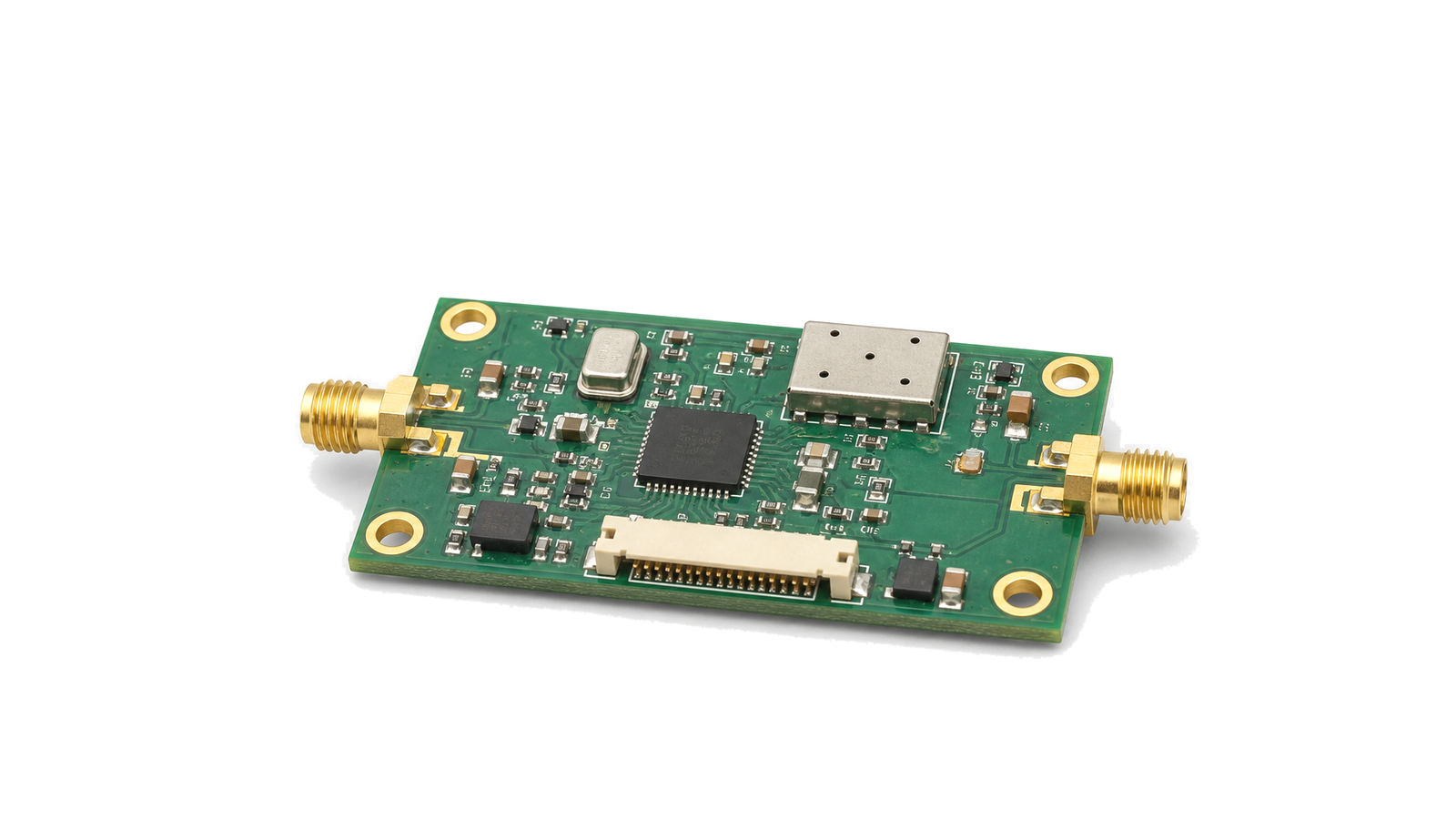
Phase-locked loop PLL hardware for RF frequency generation

FAQ

What does PLL settling time mean, and why is lock detect not enough?

PLL settling time is the time from a defined disturbance until the RF output enters and remains inside specified frequency, phase, amplitude and spectral limits; lock detect is only an internal status signal.

When should an RF source use phase-noise spot limits versus integrated jitter?

Use phase-noise spot or mask limits when offset regions drive RF behavior; use integrated jitter only when the project defines the integration band and a time-domain error budget.

Engineering inquiry

Share your RF requirement

Share the product, operating requirements and project context. Our engineering team will route your request to the right specialist.

AttachmentsAttach drawings, BOMs, specifications or test files. Up to 5 files, 10 MB each and 25 MB total.
or drag and dropPDF, DOCX, XLSX, CSV, TXT, JPG, PNG, S1P and S2P
Typically reviewed within one business dayProject information is handled confidentially

Phase-Locked Loops (PLL)

A PLL compares an oscillator output with a reference and controls the oscillator until the generated signal locks to the desired frequency and phase relationship. It is a core building block in frequency synthesis and agile LO generation.

Typical use

PLLs appear in synthesizers, tunable local oscillators, transceiver channels, radar frequency plans, test sources and synchronized timing hardware.

Data to confirm

Relevant records include reference frequency, divider range, loop bandwidth, lock time, phase noise contribution, spur performance, tuning control, supply rails and programming interface.