
LCRF

Privacy preferences

Choose optional purposes independently. You can change or withdraw your choice at any time from the footer.

Strictly necessary

Required for security, session functions and storing your privacy choice.

Always active
Preferences

Remembers optional display or language settings when these features are enabled.

Analytics

Uses first-party visitor and session identifiers to measure pages, referrals and inquiry interactions.

Marketing

Allows marketing measurement or third-party advertising technologies if they are introduced in the future.

Driver Amplifiers

RF driver amplifiers raise an intermediate RF or microwave signal to the level needed by a following power amplifier, converter, modulator or test path. They sit between small-signal stages and higher-power output hardware.

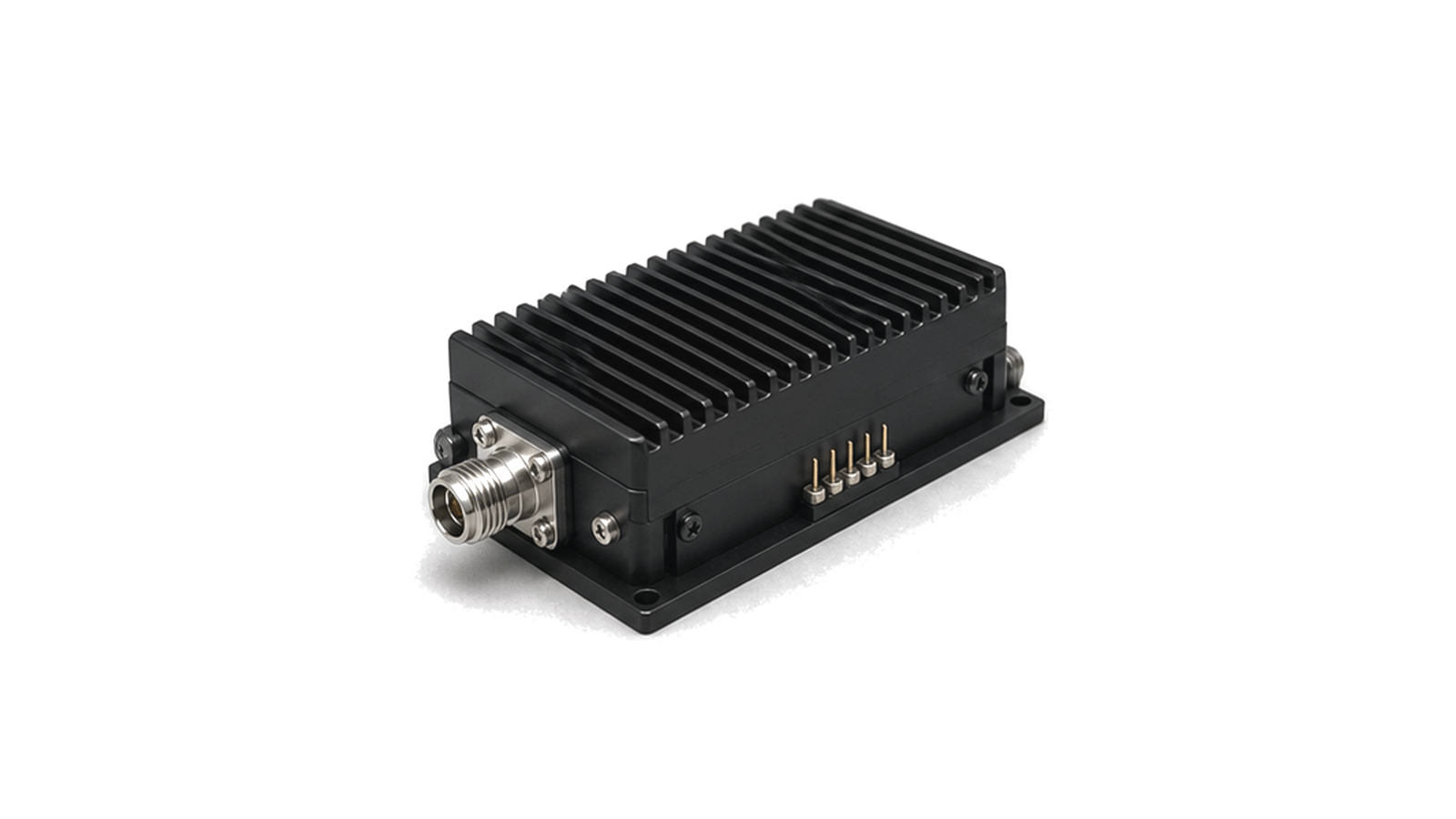
RF driver amplifier module

FAQ

What should be compared before selecting an RF amplifier family?

Choose the RF amplifier family from its signal-chain role first; then compare band, gain, noise or linearity, output, waveform, interfaces and thermal limits under equivalent conditions.

Engineering inquiry

Share your RF requirement

Share the product, operating requirements and project context. Our engineering team will route your request to the right specialist.

AttachmentsAttach drawings, BOMs, specifications or test files. Up to 5 files, 10 MB each and 25 MB total.
or drag and dropPDF, DOCX, XLSX, CSV, TXT, JPG, PNG, S1P and S2P
Typically reviewed within one business dayProject information is handled confidentially

RF driver amplifiers

Driver amplifiers provide the controlled drive level between low-power RF stages and a following power device or subsystem. They are used when a signal source, converter or modulator cannot directly drive the next stage with enough margin, or when the transmit chain needs a stable gain block before the final PA.

What defines the driver stage

The driver stage is not the final output amplifier and it is not a receiver LNA. Its value is the usable drive power delivered with predictable gain, compression behavior and linearity. Output level, gain flatness, P1dB or compression margin, bias current, stability, thermal rise and interface impedance determine whether the following stage receives a clean and repeatable input.