
LCRF

Privacy preferences

Choose optional purposes independently. You can change or withdraw your choice at any time from the footer.

Strictly necessary

Required for security, session functions and storing your privacy choice.

Always active
Preferences

Remembers optional display or language settings when these features are enabled.

Analytics

Uses first-party visitor and session identifiers to measure pages, referrals and inquiry interactions.

Marketing

Allows marketing measurement or third-party advertising technologies if they are introduced in the future.

RF Capacitors

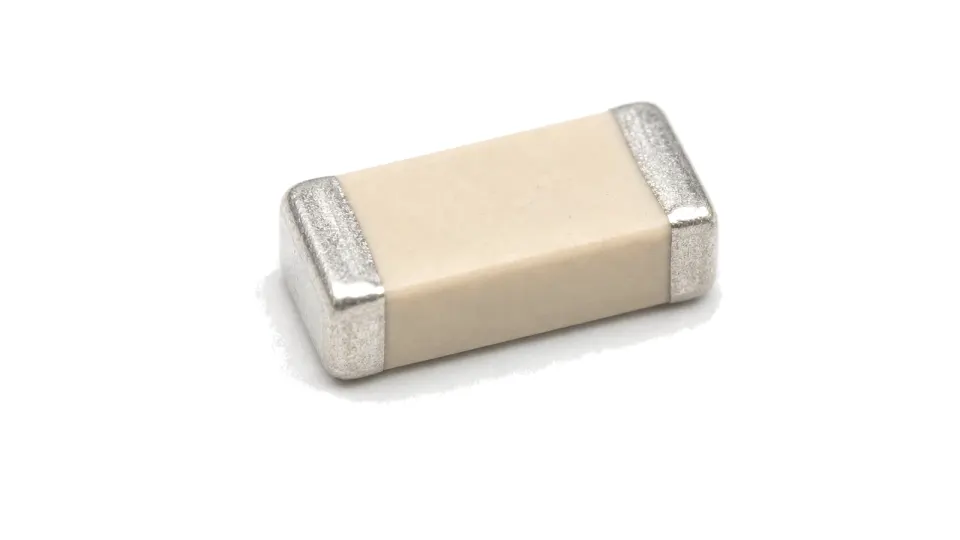
RF capacitors provide controlled capacitance for impedance matching, coupling, bypassing and resonant RF networks. They are used where capacitance stability, parasitic behavior, voltage rating and package layout affect signal integrity.

RF Capacitors

FAQ

Why must a passive RF impedance network have a defined reference plane and complex S-parameters?

The reference plane determines where impedance and waves are defined; complex S-parameters retain magnitude and phase needed to move planes, de-embed fixtures and predict network interaction.

Engineering inquiry

Share your RF requirement

Share the product, operating requirements and project context. Our engineering team will route your request to the right specialist.

AttachmentsAttach drawings, BOMs, specifications or test files. Up to 5 files, 10 MB each and 25 MB total.
or drag and dropPDF, DOCX, XLSX, CSV, TXT, JPG, PNG, S1P and S2P
Typically reviewed within one business dayProject information is handled confidentially

RF Capacitors

RF capacitors store and release electric energy inside high-frequency circuits. They appear in matching networks, DC blocking paths, bypass networks, resonators and tuned filters where a standard low-frequency capacitor may introduce too much loss or parasitic behavior.

Engineering considerations

  • Capacitance tolerance and temperature coefficient influence tuning accuracy.
  • Self-resonant frequency and equivalent series resistance determine useful operating range.
  • Voltage rating, package size and pad layout affect reliability at power and frequency.

Common use

Typical RF capacitor choices are reviewed in oscillator biasing, amplifier matching, filter tuning, antenna matching and compact microwave assemblies.