
LCRF

Privacy preferences

Choose optional purposes independently. You can change or withdraw your choice at any time from the footer.

Strictly necessary

Required for security, session functions and storing your privacy choice.

Always active
Preferences

Remembers optional display or language settings when these features are enabled.

Analytics

Uses first-party visitor and session identifiers to measure pages, referrals and inquiry interactions.

Marketing

Allows marketing measurement or third-party advertising technologies if they are introduced in the future.

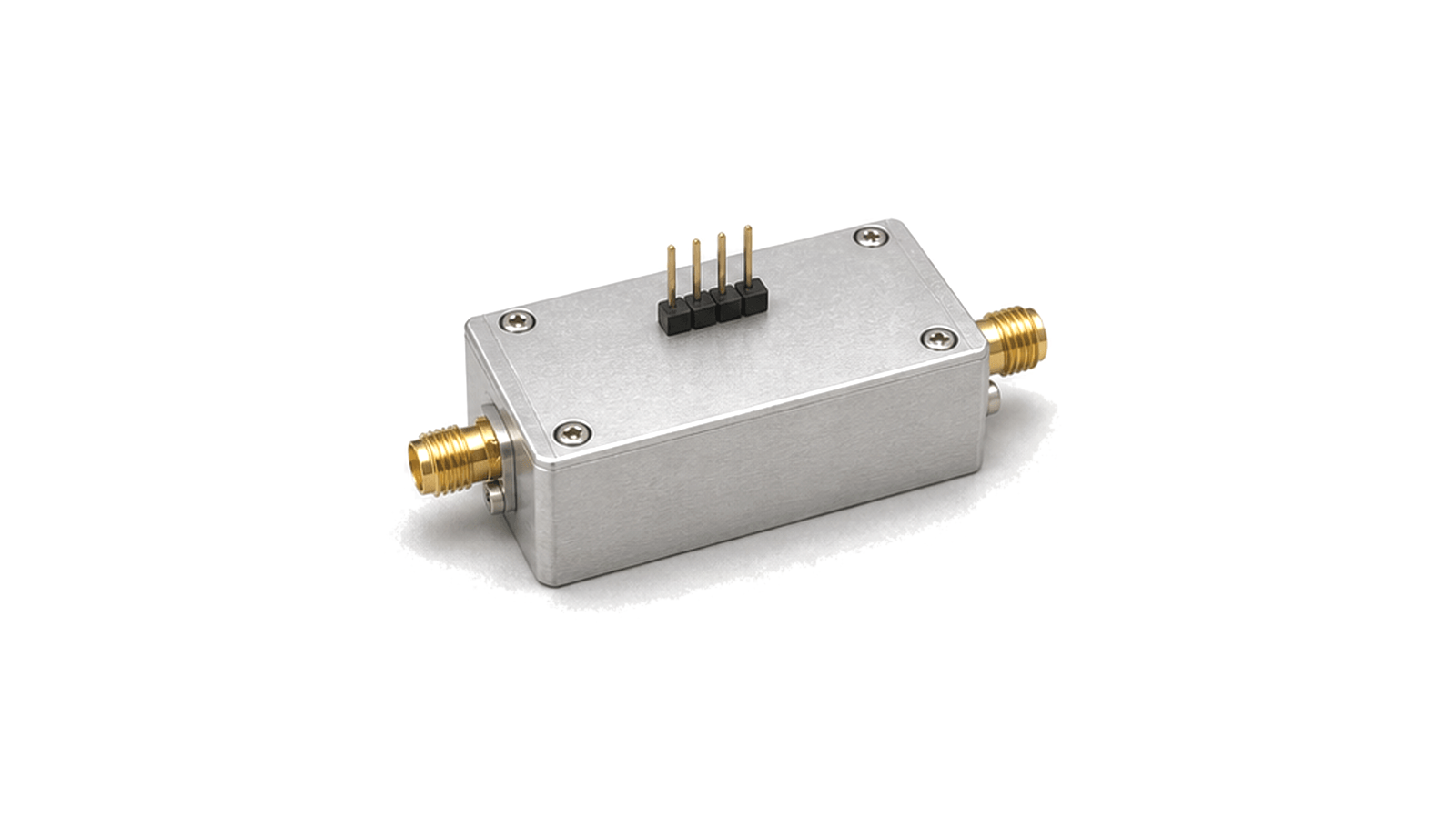
PIN Diode Switches

PIN diode switches use biased semiconductor junctions to control RF and microwave paths without moving contacts. They are used in fast T/R switching, RF gating, receiver protection and compact control modules.

PIN diode RF switch for fast solid-state signal control

FAQ

When should an electromechanical RF switch be used instead of a solid-state switch?

Electromechanical and solid-state switches occupy different loss, isolation, speed, power, size, control and lifetime boundaries; the route and switching sequence decide which is preferable.

How do insertion loss, isolation and crosstalk affect an RF switch route?

Insertion loss reduces the wanted path; isolation and crosstalk bound unwanted energy between named routes, so all three must be budgeted at the assembled matrix ports.

Which hot-switch, cold-switch and settling-time details belong in an RF switch RFQ?

An RFQ must separate carry power from power during transition and define the command, blanking, contact or logic change, RF settling, recovery and readback sequence.

What is the difference between a reflective and an absorptive RF switch?

A reflective switch leaves an unselected port mismatched, while an absorptive switch presents a defined termination over stated conditions; that choice affects stability, transients and off-port power.

Engineering inquiry

Share your RF requirement

Share the product, operating requirements and project context. Our engineering team will route your request to the right specialist.

AttachmentsAttach drawings, BOMs, specifications or test files. Up to 5 files, 10 MB each and 25 MB total.
or drag and dropPDF, DOCX, XLSX, CSV, TXT, JPG, PNG, S1P and S2P
Typically reviewed within one business dayProject information is handled confidentially

PIN Diode Switches

PIN diode switches control RF paths by changing the bias state of semiconductor diodes. Because the routing element has no moving contact, the switch can operate quickly and fit compact RF control assemblies.

System role

They appear in transmit/receive paths, pulse routing, RF blanking, receiver protection, attenuator or limiter networks and modules where fast electronic control is part of the signal chain.

Key data

Useful records include switching speed, insertion loss, isolation, power handling, bias voltage and current, linearity, recovery time, thermal behavior, package form and control interface.