
LCRF

Privacy preferences

Choose optional purposes independently. You can change or withdraw your choice at any time from the footer.

Strictly necessary

Required for security, session functions and storing your privacy choice.

Always active
Preferences

Remembers optional display or language settings when these features are enabled.

Analytics

Uses first-party visitor and session identifiers to measure pages, referrals and inquiry interactions.

Marketing

Allows marketing measurement or third-party advertising technologies if they are introduced in the future.

High-pass Filters

High-pass filters pass RF or microwave energy above a defined cutoff while reducing lower-frequency feedthrough, bias noise and unwanted low-band signals. They are used in receiver protection, broadband test paths and front-end conditioning.

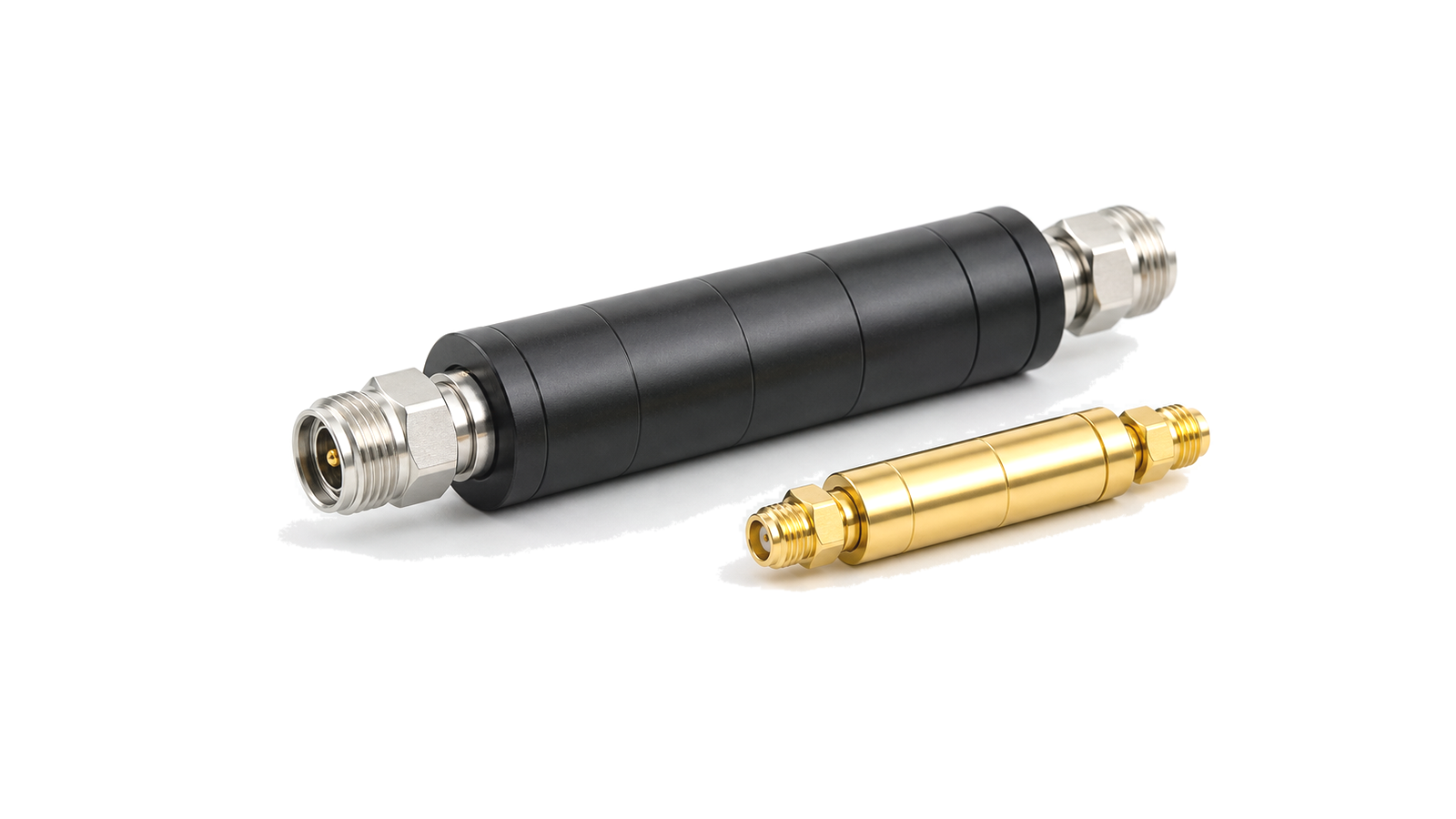
High-pass RF filter module with coaxial connectors

FAQ

What is the difference between RF filter insertion loss and return loss?

Insertion loss measures transmission reduction through the intended path; return loss measures mismatch at a port under defined terminations, so both are needed.

How should RF filter power handling be derated for insertion loss and temperature?

Derate RF filter power from actual dissipated heat, mismatch and field stress at the declared CW or pulsed waveform, mounting and temperature, then recheck the frequency mask at equilibrium.

Engineering inquiry

Share your RF requirement

Share the product, operating requirements and project context. Our engineering team will route your request to the right specialist.

AttachmentsAttach drawings, BOMs, specifications or test files. Up to 5 files, 10 MB each and 25 MB total.
or drag and dropPDF, DOCX, XLSX, CSV, TXT, JPG, PNG, S1P and S2P
Typically reviewed within one business dayProject information is handled confidentially

High-pass filters

High-pass filters keep the higher-frequency portion of an RF or microwave path while attenuating energy below the cutoff region. They are useful when low-frequency components, leakage or bias-related noise should not enter the following stage.

Cutoff behavior and low-band rejection

Key data includes cutoff frequency, transition slope, passband insertion loss, return loss, low-frequency rejection, power handling, connector type, package size and temperature behavior. These values affect receiver inputs, broadband measurement paths, frequency-domain test setups, front-end protection and signal conditioning ahead of mixers or amplifiers.