
LCRF

Privacy preferences

Choose optional purposes independently. You can change or withdraw your choice at any time from the footer.

Strictly necessary

Required for security, session functions and storing your privacy choice.

Always active
Preferences

Remembers optional display or language settings when these features are enabled.

Analytics

Uses first-party visitor and session identifiers to measure pages, referrals and inquiry interactions.

Marketing

Allows marketing measurement or third-party advertising technologies if they are introduced in the future.

DLVA Log Video Amplifiers

DLVA log video amplifiers combine RF detection and video amplification to produce a fast logarithmic output. They are used where pulsed or rapidly changing RF signals must be observed in radar, EW, receiver and test paths.

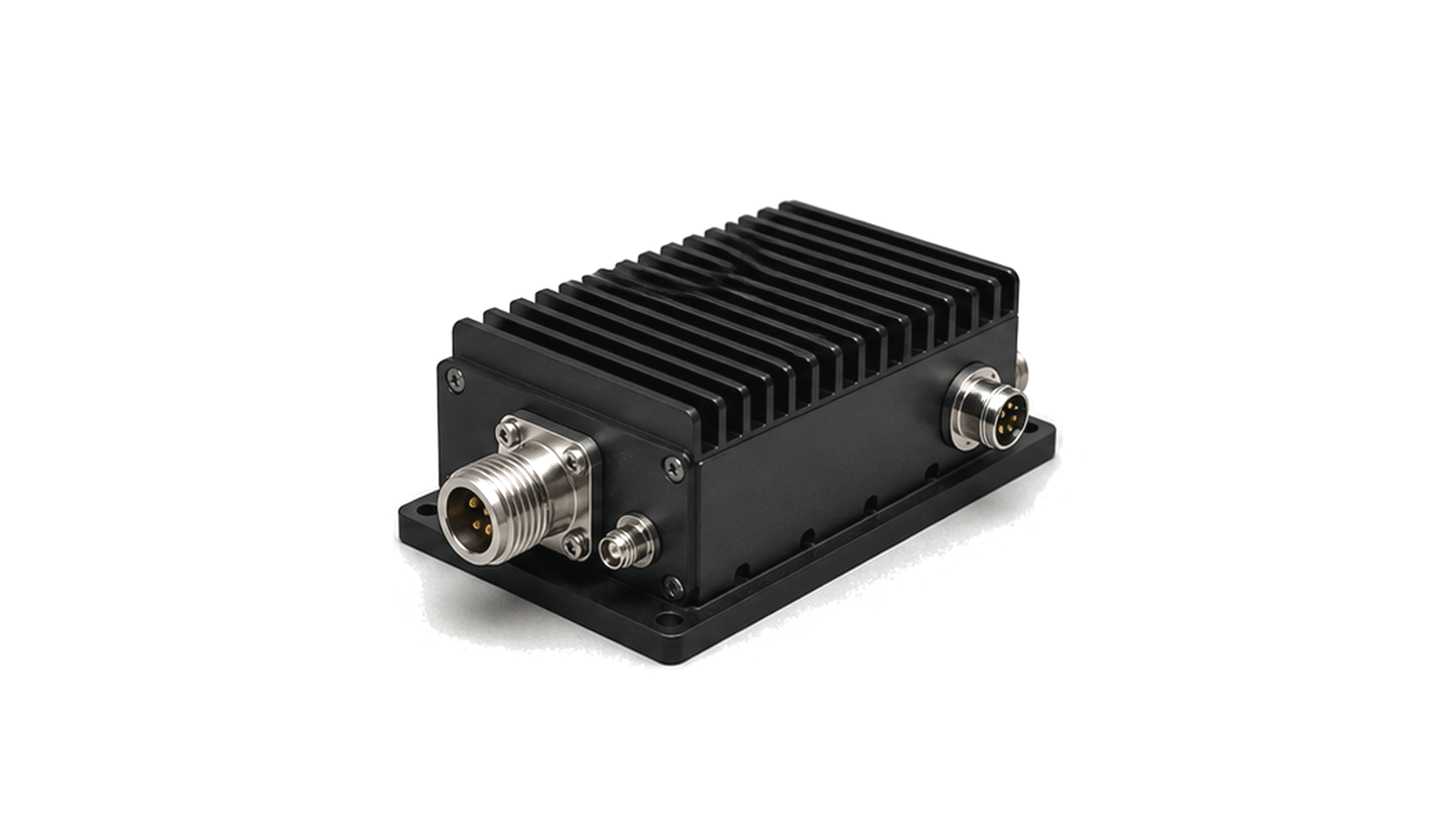
DLVA log video amplifier module for RF pulse monitoring

FAQ

What is an RF measurement reference plane, and when is fixture de-embedding required?

The measurement reference plane is the electrical boundary where a corrected value is claimed; de-embedding is needed only when a characterized fixture network must be removed to report at a different DUT plane.

How should RF P1dB and two-tone intermodulation tests differ?

P1dB is a single-tone gain-compression sweep, while two-tone IMD measures nonlinear mixing products with stated tone spacing, per-tone power and system residual checks; the results answer different questions.

Engineering inquiry

Share your RF requirement

Share the product, operating requirements and project context. Our engineering team will route your request to the right specialist.

AttachmentsAttach drawings, BOMs, specifications or test files. Up to 5 files, 10 MB each and 25 MB total.
or drag and dropPDF, DOCX, XLSX, CSV, TXT, JPG, PNG, S1P and S2P
Typically reviewed within one business dayProject information is handled confidentially

DLVA log video amplifiers

DLVA log video amplifiers detect an RF or microwave input and amplify the resulting video signal with a logarithmic response. They are used when the useful information is in the envelope, pulse level or fast amplitude change rather than in a slow average-power reading.

Pulse and transient monitoring

Key data includes input dynamic range, frequency coverage, log linearity, video bandwidth, rise time, recovery behavior, output swing, noise floor, maximum input level and operating temperature. These values affect radar receiver monitoring, EW measurement paths, threshold detection, pulse amplitude logging and RF test equipment that must preserve timing behavior.