
LCRF

Privacy preferences

Choose optional purposes independently. You can change or withdraw your choice at any time from the footer.

Strictly necessary

Required for security, session functions and storing your privacy choice.

Always active
Preferences

Remembers optional display or language settings when these features are enabled.

Analytics

Uses first-party visitor and session identifiers to measure pages, referrals and inquiry interactions.

Marketing

Allows marketing measurement or third-party advertising technologies if they are introduced in the future.

Baluns & Transformers

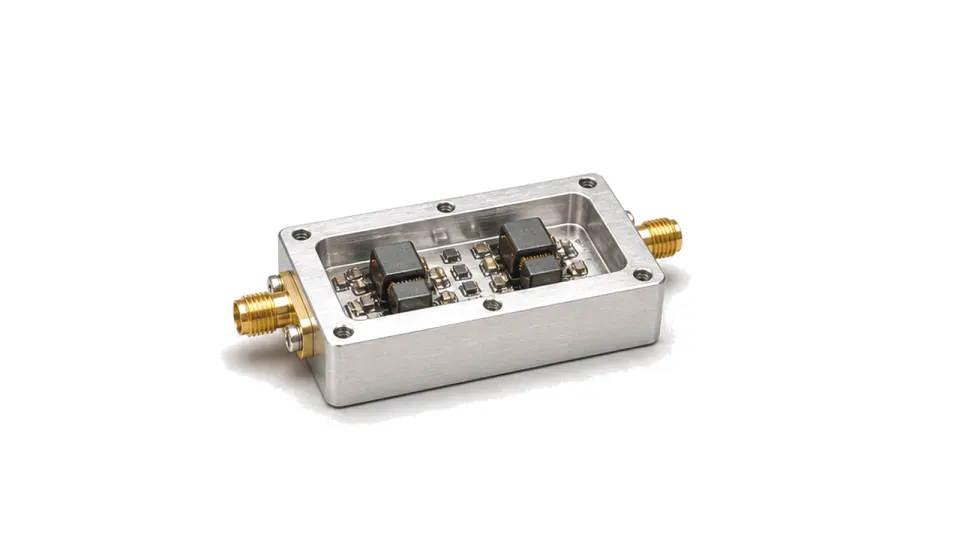
Interconnect choices affect loss and repeatability. Baluns & Transformers sits within Power Distribution, Combining & Coupling and controls phase, balance or impedance relationships between RF ports. The content focuses on phase balance, amplitude balance, isolation, impedance ratio, bandwidth and power rating for engineers, sourcing teams and system integrators.

Baluns & Transformers

FAQ

Why must a passive RF impedance network have a defined reference plane and complex S-parameters?

The reference plane determines where impedance and waves are defined; complex S-parameters retain magnitude and phase needed to move planes, de-embed fixtures and predict network interaction.

Engineering inquiry

Share your RF requirement

Share the product, operating requirements and project context. Our engineering team will route your request to the right specialist.

AttachmentsAttach drawings, BOMs, specifications or test files. Up to 5 files, 10 MB each and 25 MB total.
or drag and dropPDF, DOCX, XLSX, CSV, TXT, JPG, PNG, S1P and S2P
Typically reviewed within one business dayProject information is handled confidentially

Baluns & Transformers

Interconnect choices affect loss and repeatability. Baluns & Transformers controls phase, balance or impedance relationships between RF ports for balanced circuits, antenna feeds, PA combining and measurement paths. The information is organized around how this hardware is used in an RF system.

Key data centers on phase balance, amplitude balance, isolation, impedance ratio, bandwidth and power rating. Those details help engineering, sourcing and integration teams compare the record against the actual signal path, mechanical boundary and operating environment.

When reviewed with model data, outline dimensions, test conditions and delivery documents, the content makes project scope, constraints and follow-up verification points easier to align early.